
Turning a museum visit into Active Learning at the Parlamentarium
A visit to the European Parliament's visitor centre, the Parlamentarium, can easily become a passive walk-through of interactive screens. During the EUCLASS Alliance study visit in Brussels,, the organisers used a structured worksheet to make sure every student left with more than a set of photographs — they left having actively searched, interpreted and reflected on what they saw.
Rather than asking students to simply “look around,” the worksheet guided them through five exhibition areas, each paired with a concrete task and a reflection question. In the World Map area, students had to find an example of EU international cooperation and an EU-funded project from their own country, then reflect on why global cooperation matters and how that project actually improves people's lives. In the History Tunnel, they picked an object from the post-1945 period and identified the year their own country joined the EU, connecting personal and national history to the broader European story. The 360° cinema area asked them to identify the EU's three main decision-making institutions and consider which one represents them most directly as citizens. In the Daily Life and Environment sections, students hunted for a concrete law on roaming charges, food safety or climate policy and were asked to explain its real impact on their own lives.
Finally, in the Citizens' Voices area, they watched a video testimony and looked up a Member of the European Parliament from their own country, closing with the question: if you could email them, what would you ask for VET students and Erasmus+ mobility?
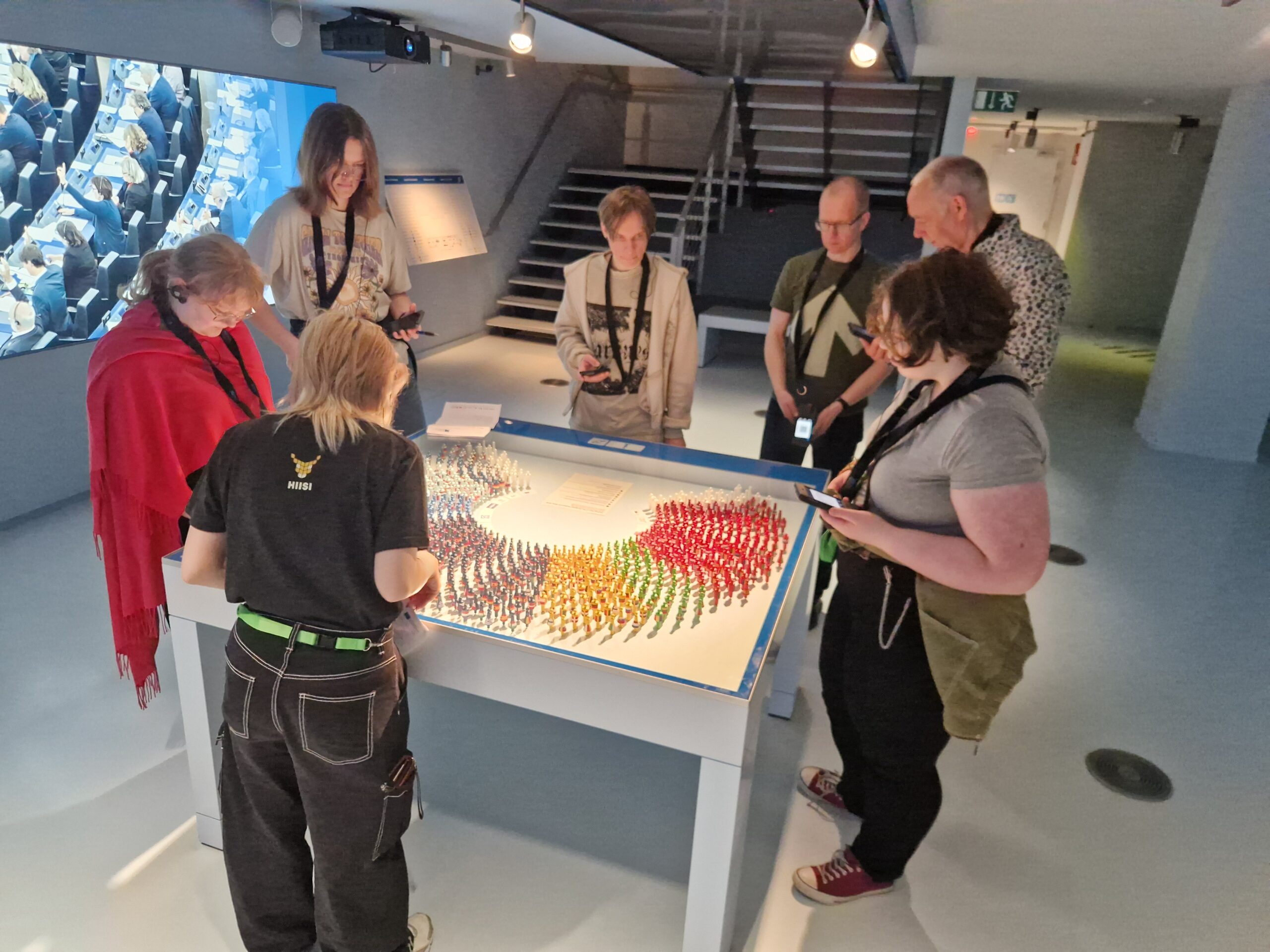
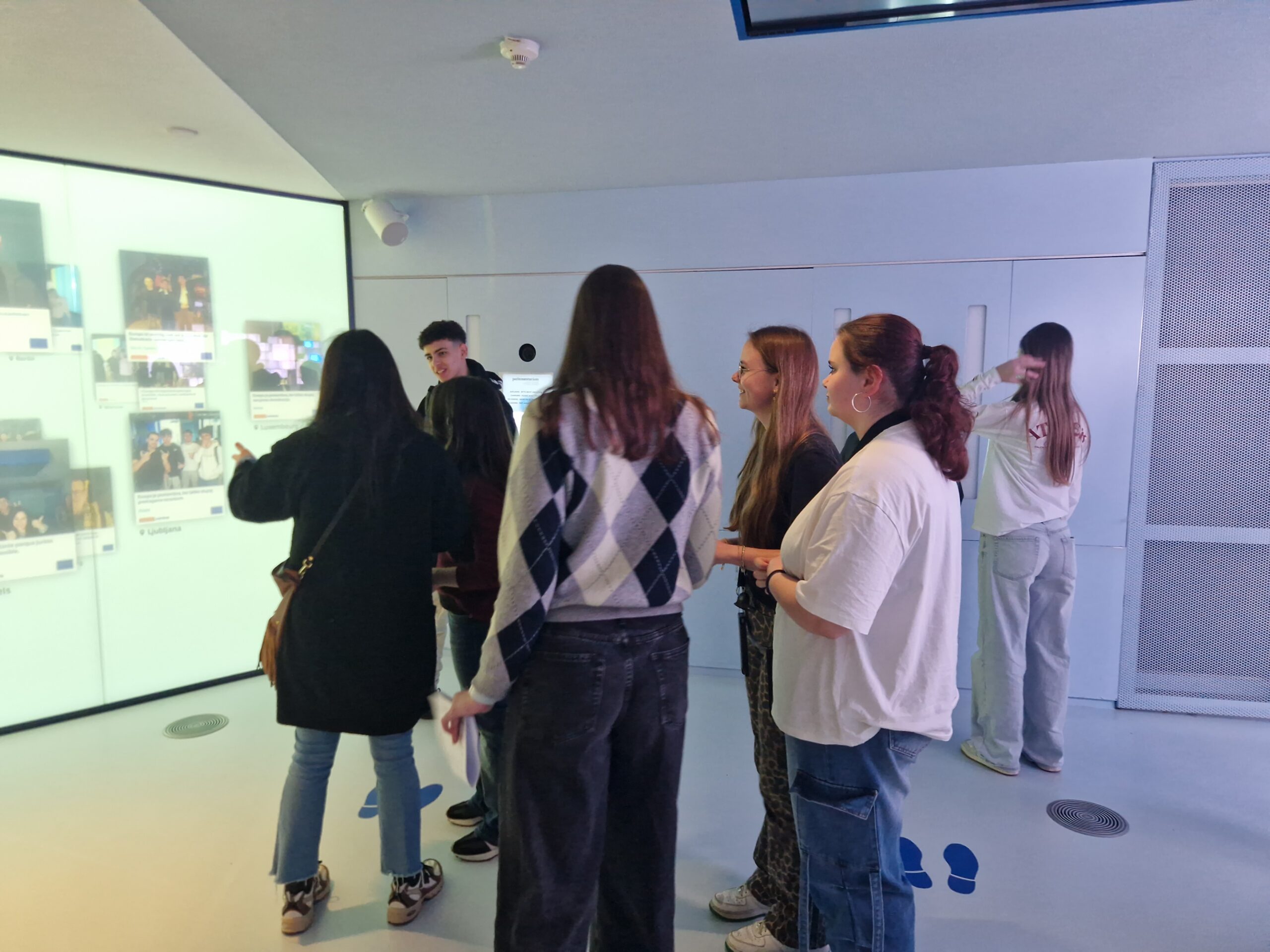
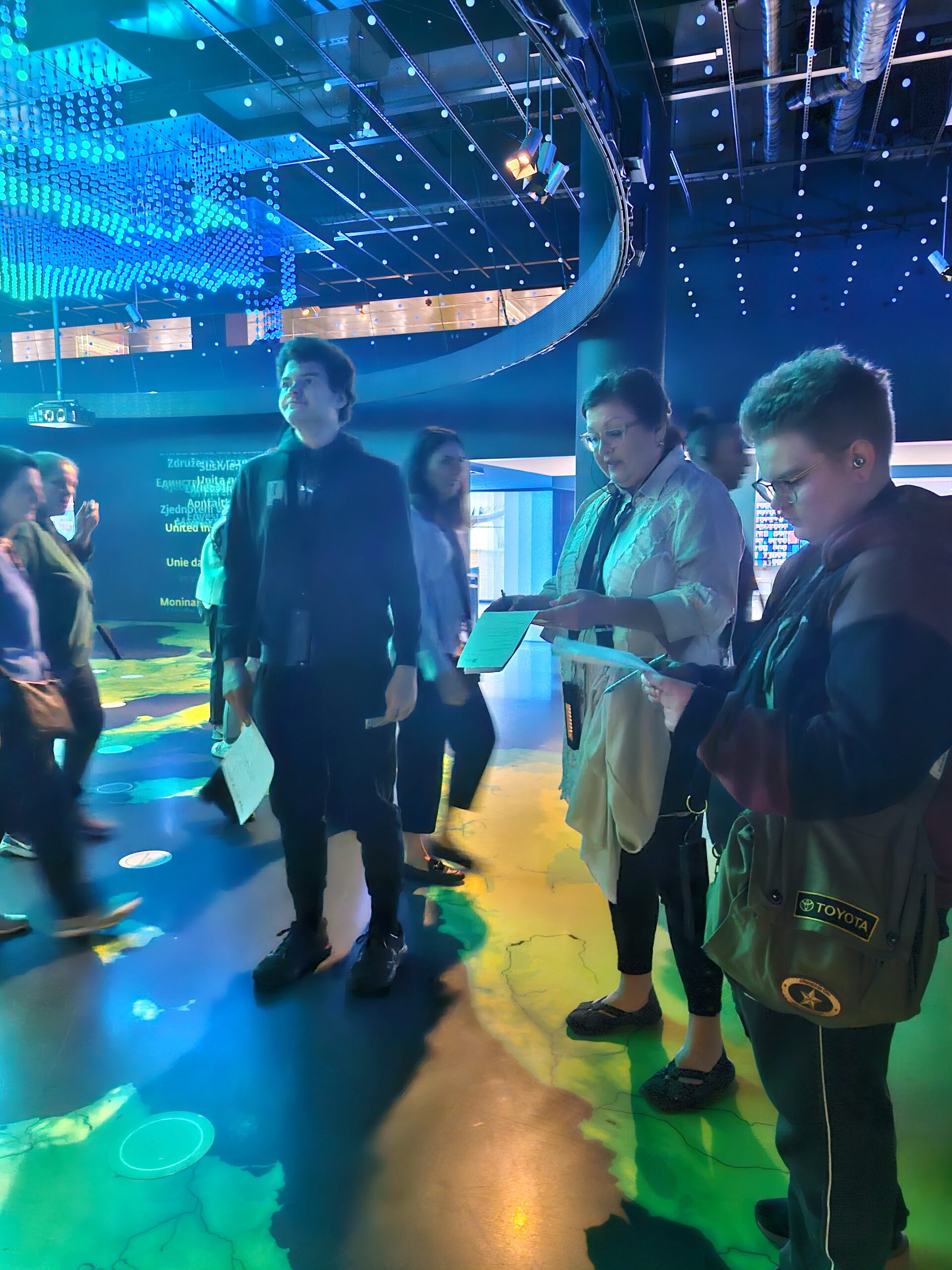
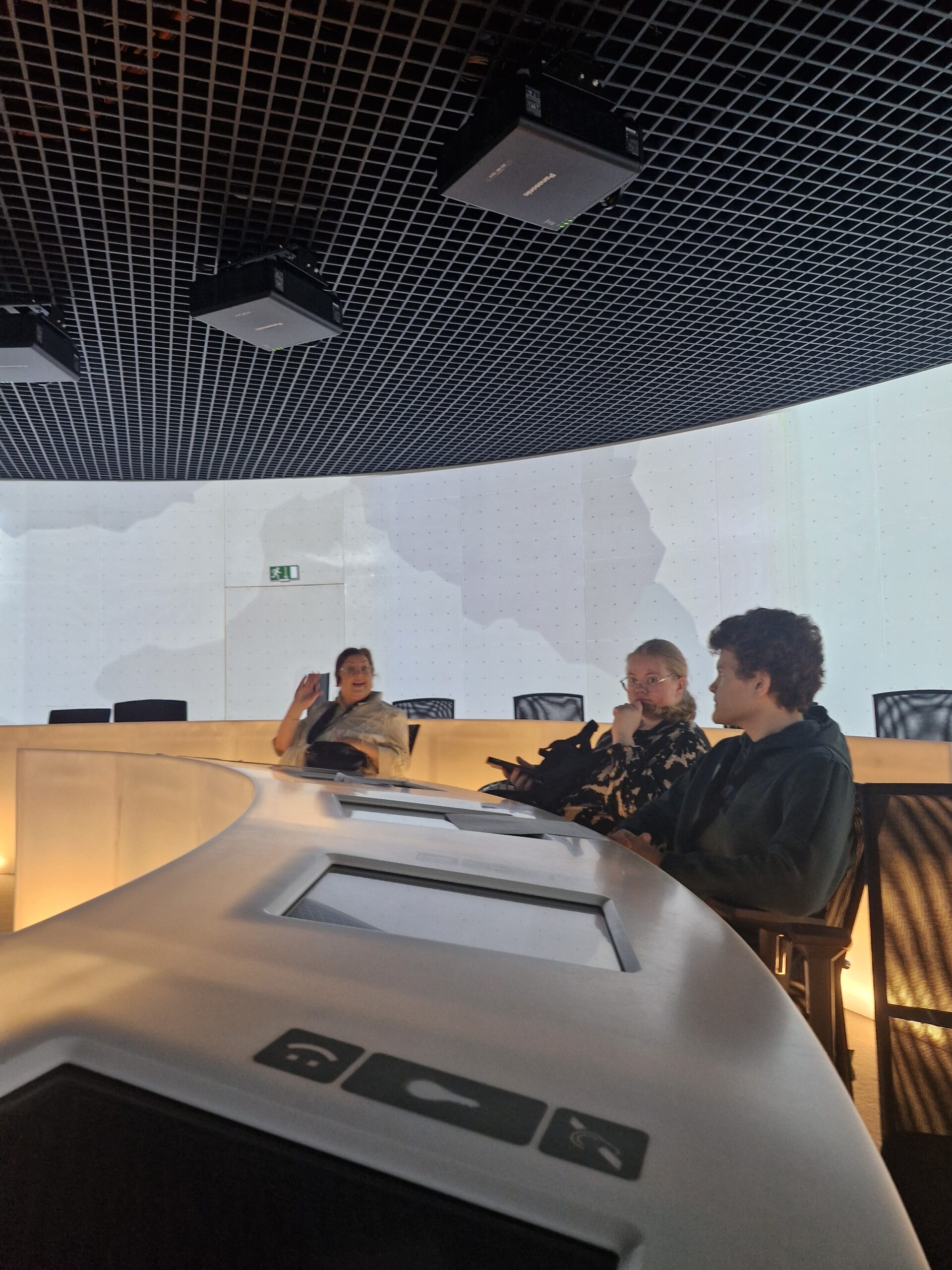
Three features make this worksheet particularly effective as a model for other groups visiting EU institutions. First, every task requires students to find something specific rather than simply absorb information, which keeps attention active throughout a self-guided visit. Second, every “find” is immediately followed by a “why does this matter to you” reflection question, linking factual content to personal and professional relevance a deliberate choice for a VET audience, for whom abstract EU policy can otherwise feel distant from daily life. Third, the visit ends with a one-sentence personal synthesis “Being a European citizen means…” giving every student, regardless of language level, a concrete and shareable output to bring to the group debrief.
The group was organised into four to five mixed-nationality clusters of two to three students, each allowed 15–20 minutes per area, with a collective reflection session at the end. Teachers received the same worksheet with model answers in advance, so they could support students without turning the visit into a guided lecture.
This approach converts a self-guided museum visit which can otherwise vary wildly in quality depending on each student's engagement into a consistent, comparable learning experience across a large multinational group. It requires no extra staff or materials beyond a printed worksheet, can be adapted to almost any museum with thematic exhibition areas, and produces a ready-made basis for the debrief that follows: “share one thing you discovered, one thing that surprised you, and one idea to improve Europe.”