
A Video Trivia Hunt to Turn Sightseeing into Storytelling
Walking students past EU institutions is one thing; getting them to actually engage with what those buildings represent is another. During the EUCLASS Alliance study visit in Brussels, the guided walk through Brussels' EU Quarter was redesigned as a video-based trivia hunt, sending small groups off with a map, a points sheet and a camera instead of a guide with a microphone.
Groups moved through the EU Quarter with a printed map and a mapping app, working through a list of locations worth different point values. At each stop, the task was the same in structure but different in content: gather in front of the location, film a short clip, and have one team member explain — in their own words, without reading from a script — why the place matters. In front of the Berlaymont and the Europa building, students had to identify the institution and name who is “in charge” there. At the Cinquantenaire park, they had to locate the Tour Beyaert and produce a clip connecting VET education to the European project. At the Leopoldspark lake, they explained why 9 May is celebrated as Europe Day. At the European Parliament, they searched out the fragment of the Berlin Wall on display and used it to reflect on what division and unity mean in Europe today.
Additional points were available for finding each participating country's permanent representation and sharing a fact about it, locating a sign bearing the name “Schuman” and explaining his role in European history, correctly counting and explaining the stars on the EU flag, capturing a stranger humming the European anthem, and — perhaps the most socially demanding task — collecting a business card from someone actually working in an EU institution. Bonus points rewarded storytelling quality, logical structure, and simply making it back on time with the video uploaded by the deadline.
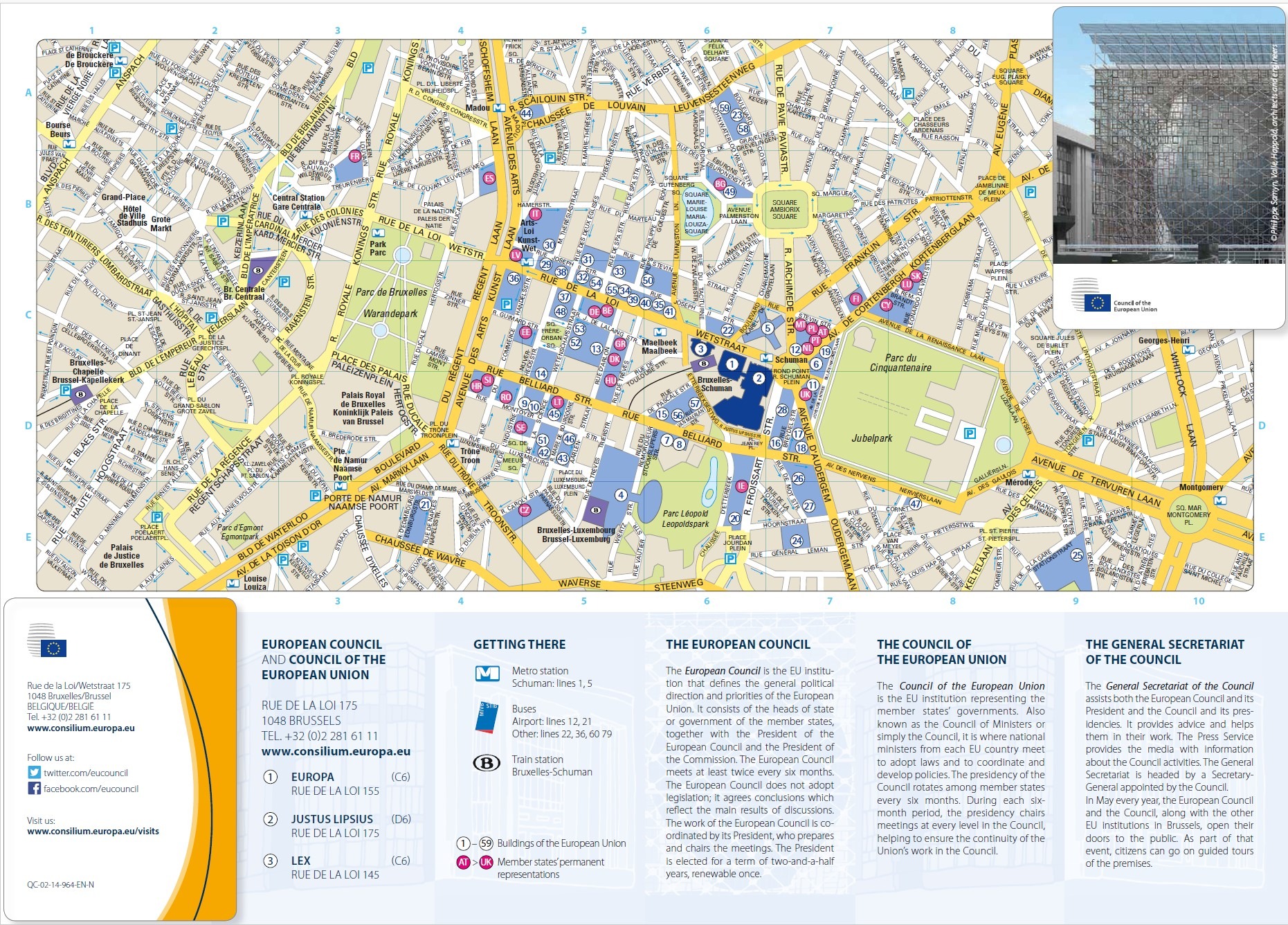
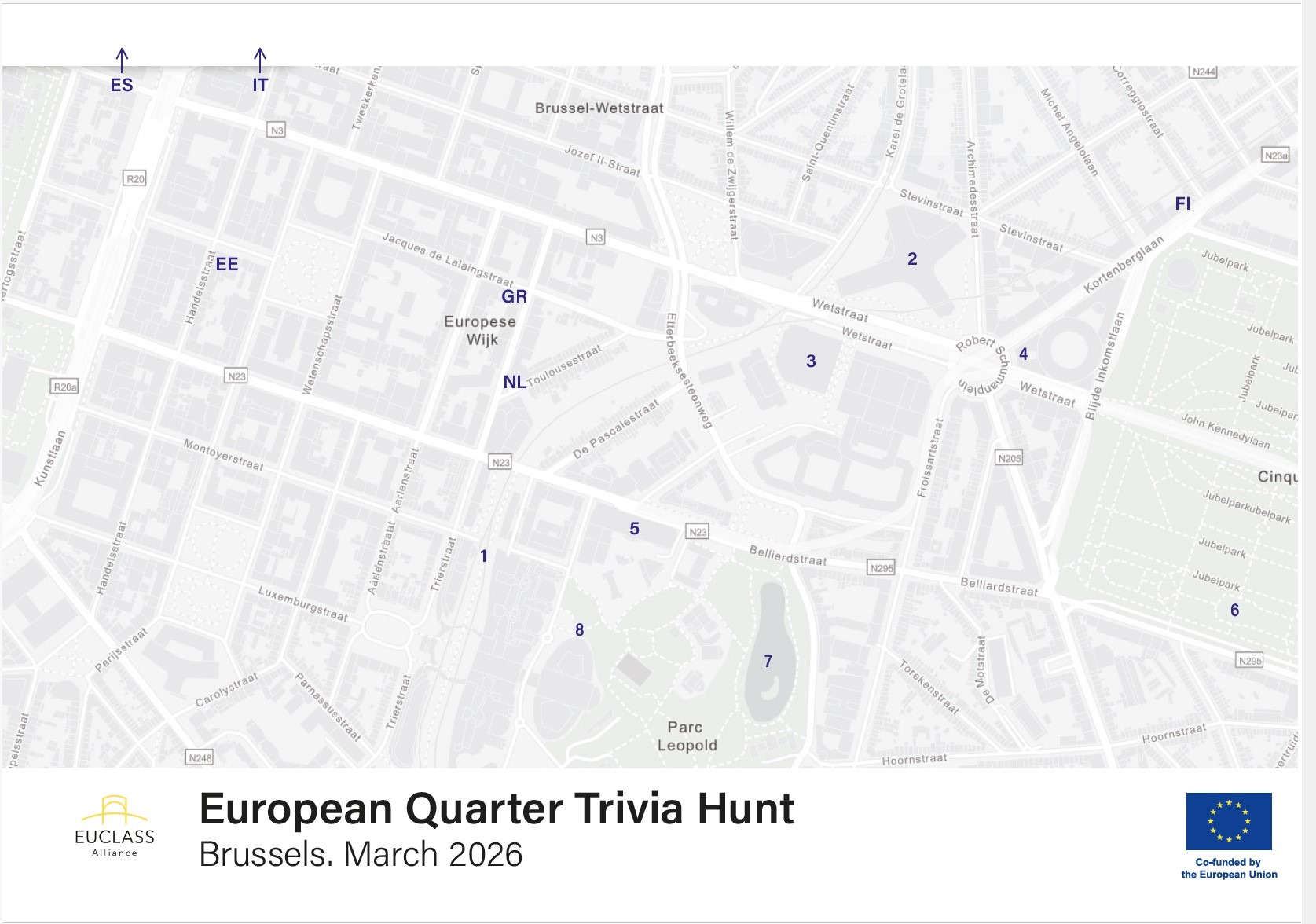
A key design choice is stated explicitly in the activity brief: there are more locations than any group can realistically visit in the time given. Rather than presenting this as a flaw, it is built in as a feature groups must prioritise, make quick decisions as a team, and accept that “doing as much as you can” is a legitimate outcome. This mirrors real project-management skills and removes the pressure of an impossible checklist.
Instead of collecting written answers, each group edits its clips into a single video, uploaded to a shared folder. This shifts the final output from a worksheet to a short documentary made by the students themselves, giving teachers a rich, reviewable artefact of what each team understood, discussed and chose to highlight — and giving students a tangible, shareable souvenir of the mobility.
Requiring an unscripted, on-camera explanation forces students to process information rather than copy it, while the points system and business-card task push them to interact with real institutional staff rather than just photograph buildings. Spreading locations across the whole EU Quarter, with member-state representations offering points specific to each nationality in the group, ensures every participant has at least one stop that is personally relevant to them. The format is easily adapted to any institutional district: swap the locations, keep the point structure, the time pressure, and the “film it, don't read it” rule.