From Global Citizenship to VET Practice: What Teachers and Trainers Can Take Away from EfVET 2026
How can global citizenship become part of everyday vocational education and training? Does it require dedicated subjects, additional resources or new projects? Or can teachers build on the learning experiences already taking place in their classrooms, workshops and workplaces?
These questions were at the centre of two complementary activities at the EfVET Annual Conference 2026 in Brussels: a panel discussion on citizenship education and an interactive workshop developed through cooperation between Erasmus+ Jean Monnet projects, including EU CLASS Alliance.
Together, the sessions explored how to move from educational principles and European policy frameworks to practical approaches that VET teachers and organisations can adapt to their own contexts.

Citizenship education belongs in vocational learning
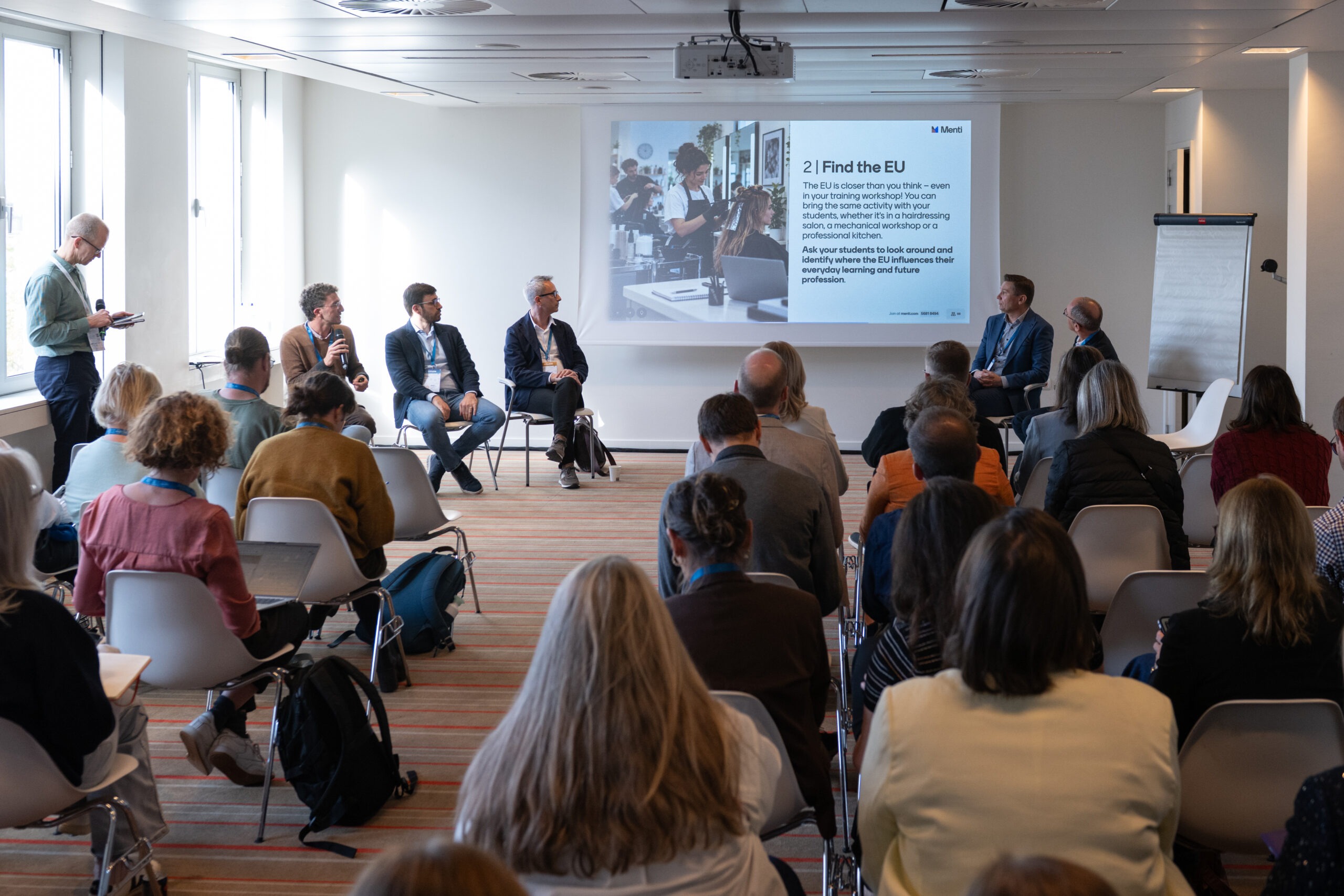
The panel “Global citizenship education in class and beyond: how to educate VET learners for global citizenship?”, held on 22 October, brought together perspectives from the European Commission, the Council of Europe, VET institutions and Jean Monnet projects.
The discussion addressed an important educational challenge: VET prepares learners for employment, but it also has a role in helping them develop the competences needed to participate in democratic and increasingly interconnected societies.
Contributions explored the importance of integrating democratic competences into vocational programmes, involving learners in meaningful participation and recognising workplaces as environments where responsibility, inclusion and ethical decision-making can be developed.
A central message was that citizenship education should not necessarily be treated as an additional subject. Opportunities already exist within vocational learning, provided that teachers and institutions are equipped to identify and develop them.