
A Peer-Led street art tour as a tool for european civic reflection
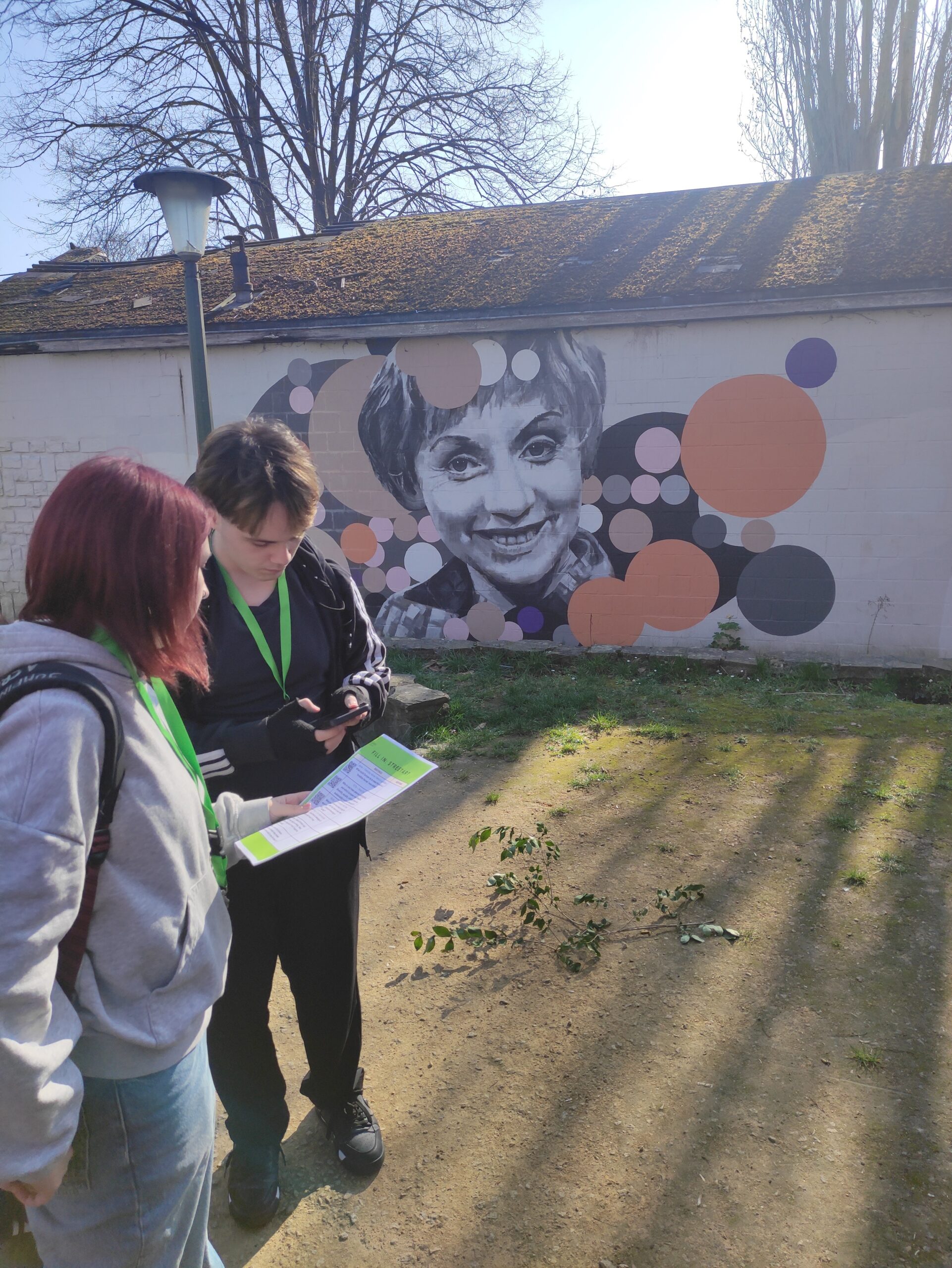
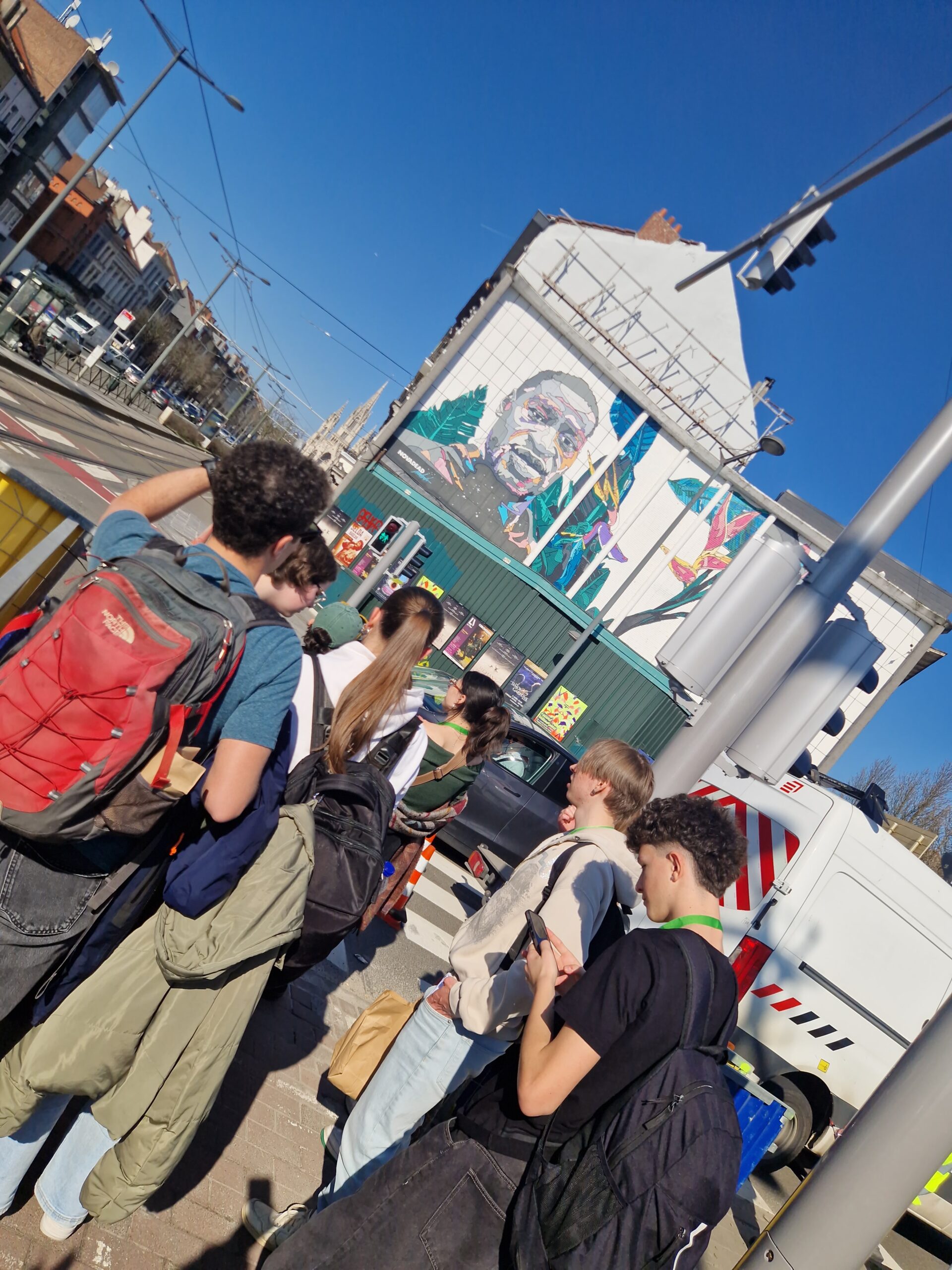
Guided tours can easily turn students into passive listeners. During the EUCLASS Alliance study visit in Brussels,the organisers flipped the format: instead of a traditional guide walking the group past sights, small international teams explored Brussels' street art scene in the Laeken district on their own, with a teacher supporting rather than leading the discussion.
Students were divided into small mixed-nationality groups, each accompanied by a teacher whose role was to facilitate, not lecture. Rather than sending every group down the same street in the same order, the route was designed as four different circular itineraries, all starting from different points and all converging at Émile Bockstael Square for a shared final moment. One group walked the full loop out and back; another started at the far end and worked its way home; a third began in the middle and closed the loop in both directions; a fourth started near the railway tracks and looped around the tower area. Staggering the groups this way avoided bottlenecks at popular murals and meant that, even though everyone visited the same ten artworks, no two groups experienced the tour in the same sequence.
Each group leader received a preparation pack: an area map, a walking route with links to an online map, background information cards on every mural, and a set of discussion questions to use at each stop. Students, in turn, were given fill-in worksheets to record their reflections as they moved through the route.
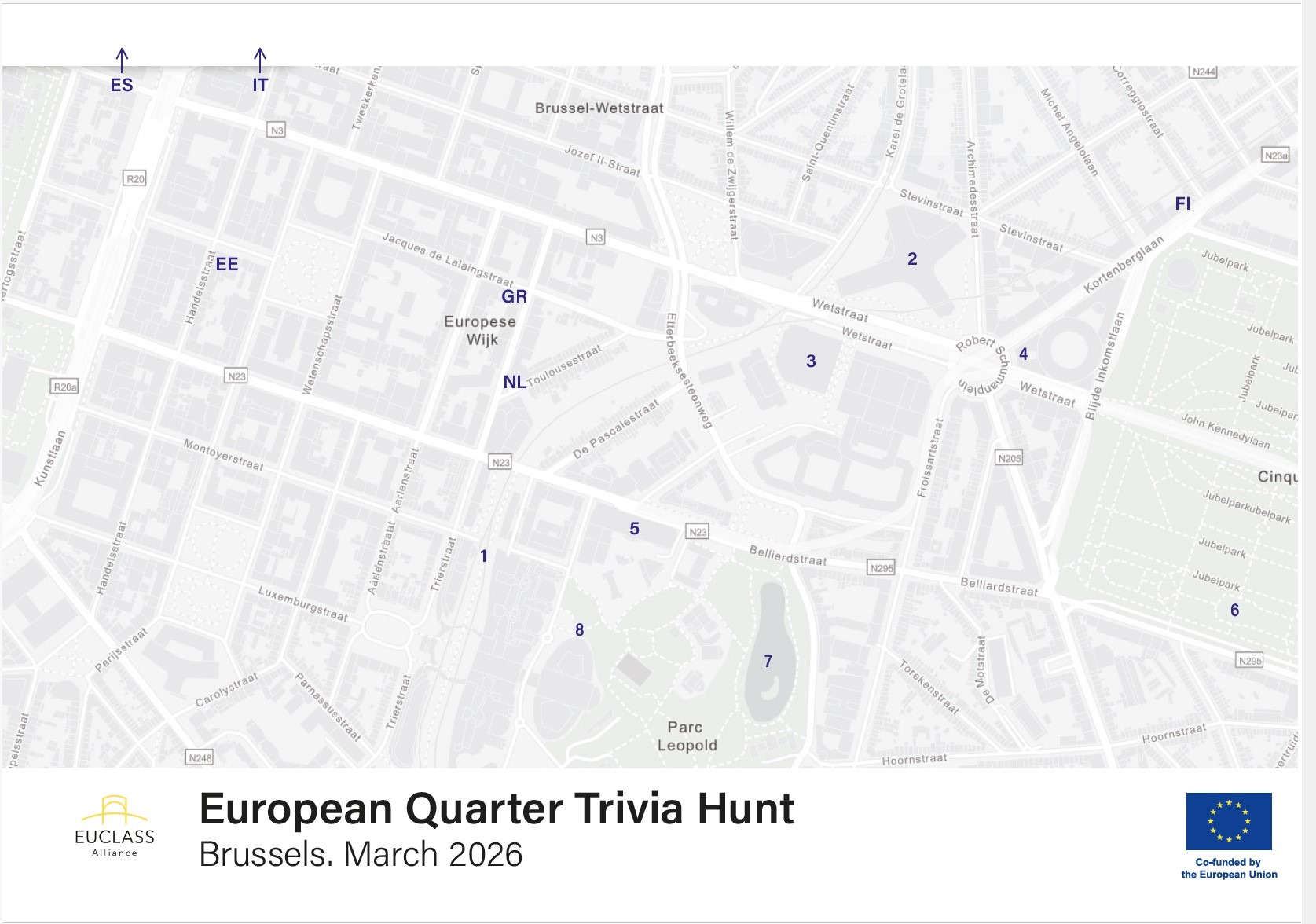
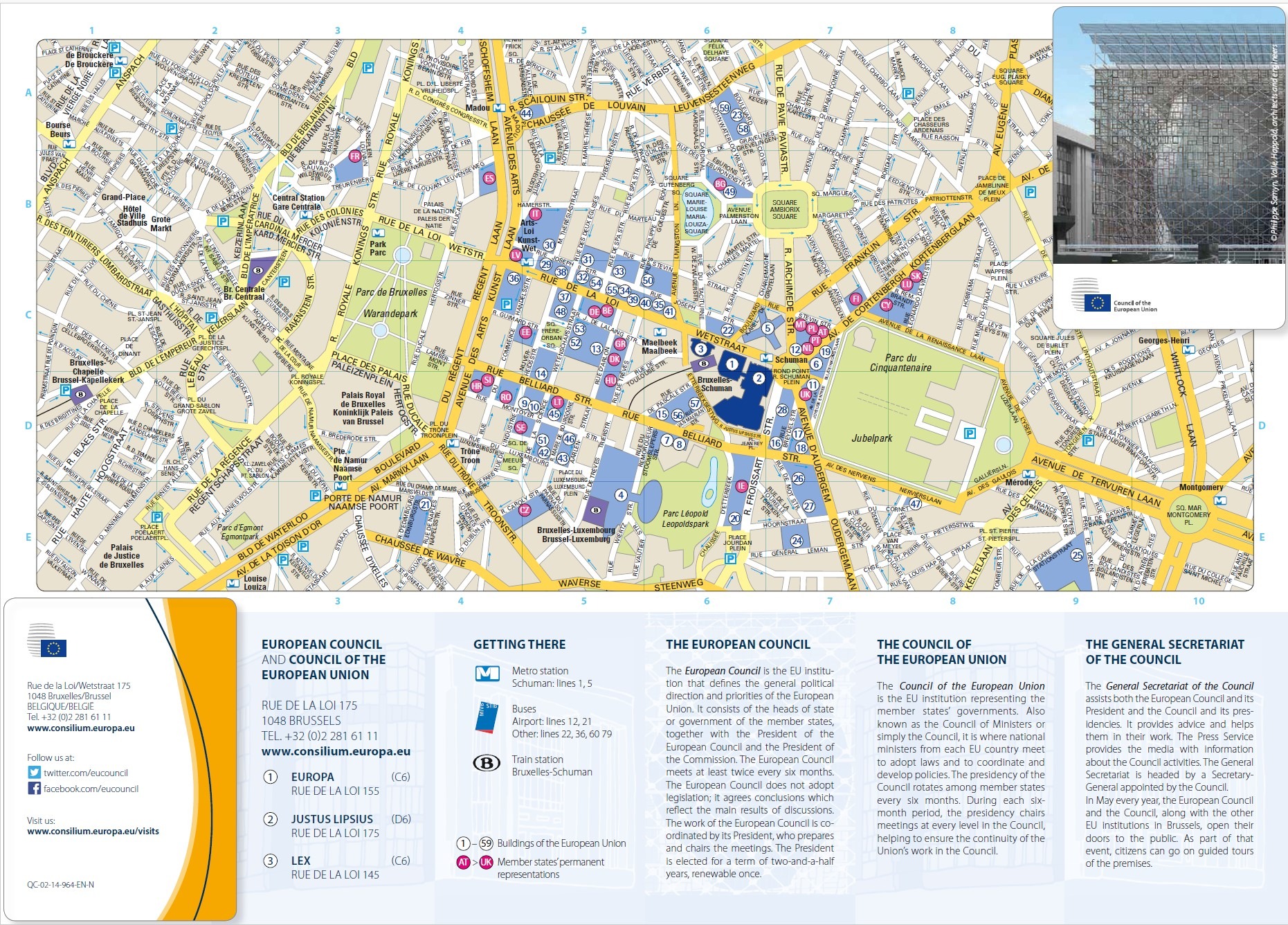
The ten stops were not chosen at random: each mural was paired with a question connecting the artwork to a European theme. A portrait celebrating “everyday heroes” prompted a discussion on the invisible work that keeps communities running; a mural about stem cell donation opened a conversation on solidarity and civic responsibility; a piece on the Israeli–Palestinian context invited students to think about how young Europeans can build understanding across difference. In each case, the worksheet asked students to link what they saw on the wall to what they thought Europe could or should do about it — turning street art appreciation into a structured exercise in values-based reflection.
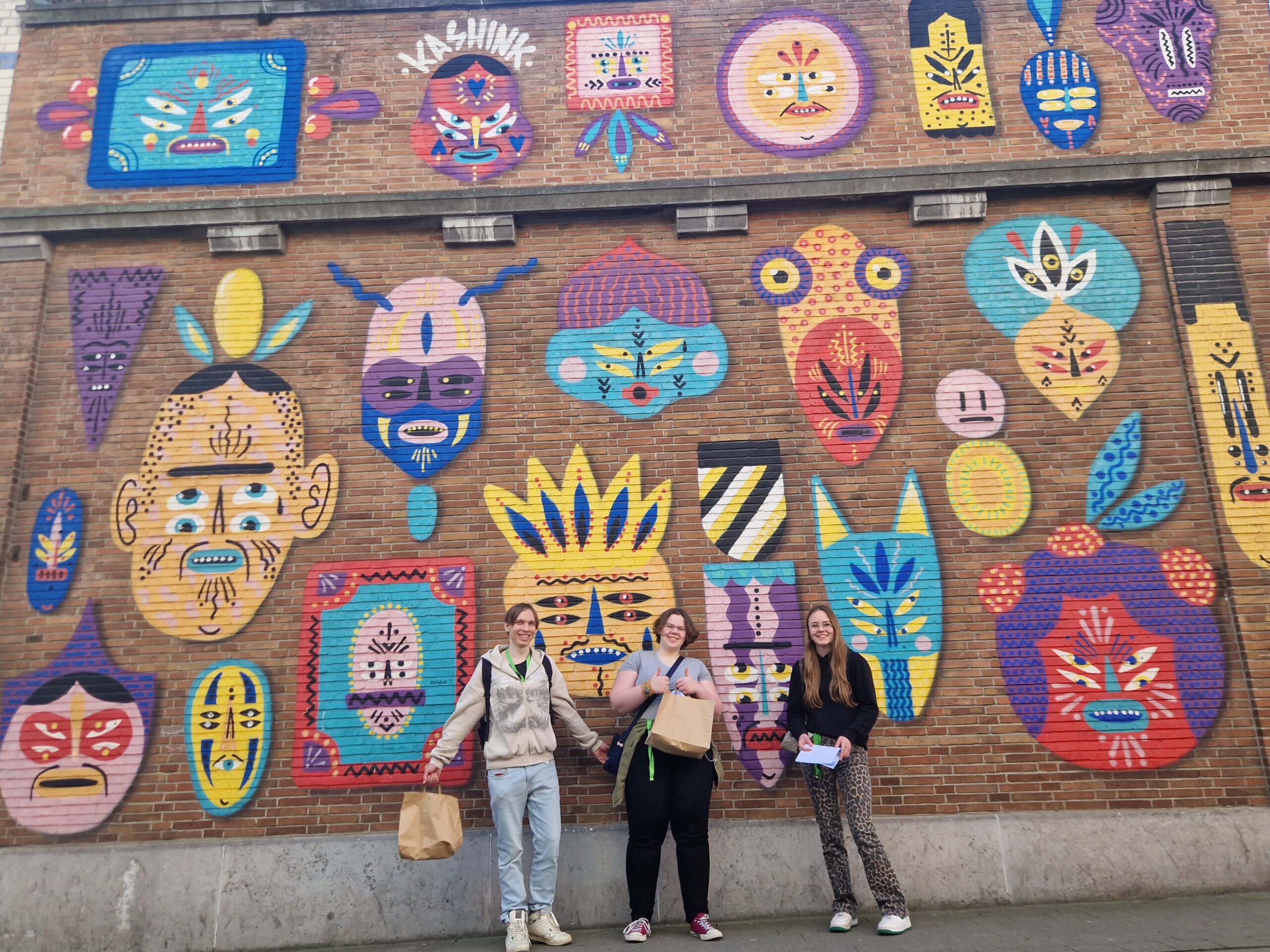
To keep energy high across a 90-minute walk, the tour included an optional photo challenge: each student could take up to three photographs of anything in the city they found meaningful, upload them to a shared platform, and add a short caption explaining their choice. This gave students ownership over part of the experience and produced a set of personal, first-person artefacts that can be reused afterwards for exhibitions, social media or debriefing sessions.
Handing the exploration itself over to small groups — while keeping teachers present as facilitators rather than narrators — shifts the cognitive work from listening to observing, discussing and writing. Splitting the group across multiple circular routes solves the practical problem of moving 36 people around a small neighbourhood without one group blocking another, while still guaranteeing a shared endpoint for a group photo and closing reflection. And by choosing murals with genuine thematic depth — solidarity, discrimination, freedom, identity — the walk becomes a mobile classroom for European citizenship education, with the city itself supplying the teaching material.
The model transfers easily to any city with a public art trail: identify five to twelve stops with thematic relevance, prepare short briefing cards and open-ended questions for each, split participants into small multi-route groups with a shared meeting point, and let the walking do the rest.