
How our Brussels group beat museum fatigue
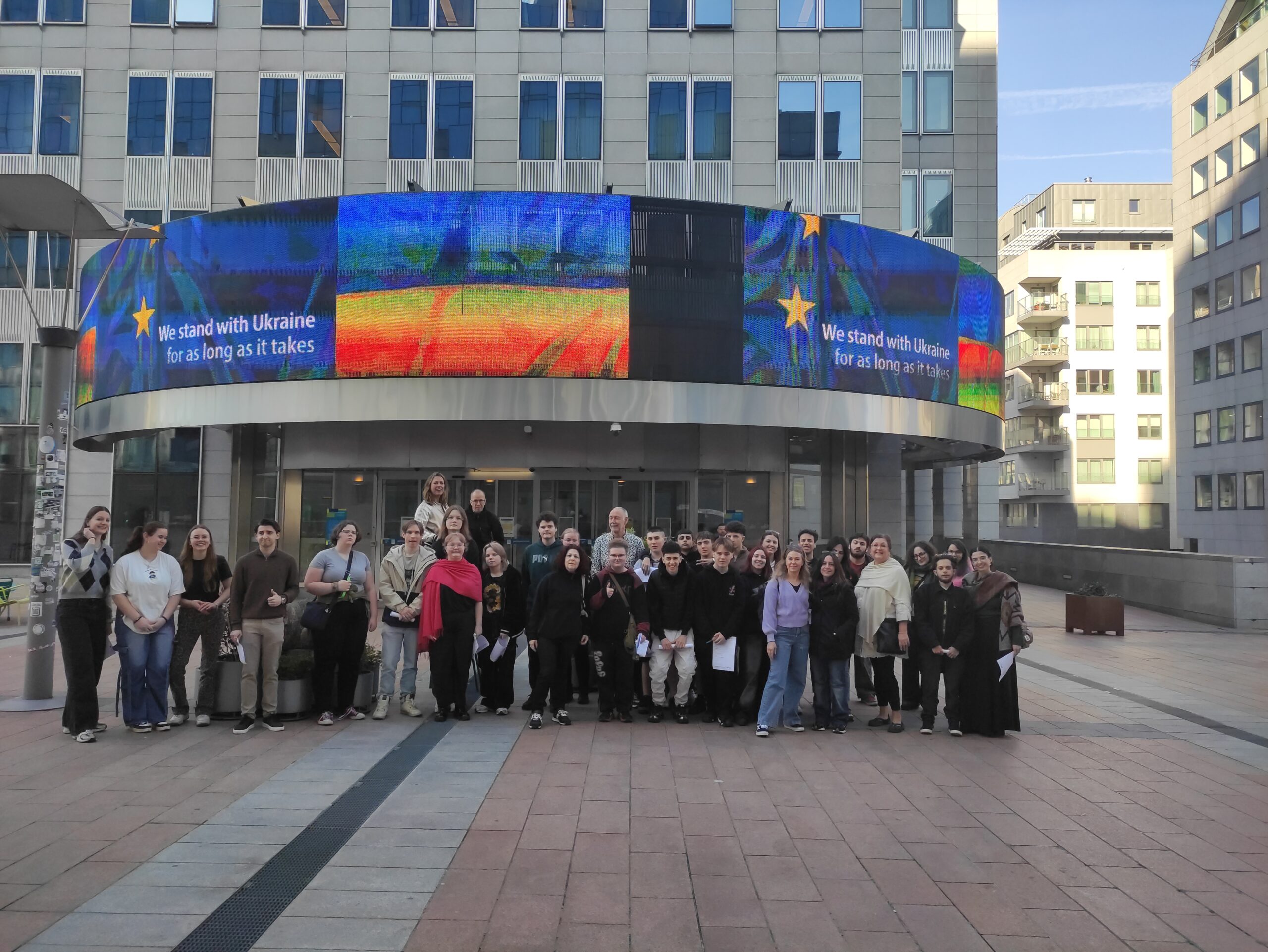
The House of European History spans multiple floors and centuries of material a lot for any group to absorb in a single visit, and too easy to turn into a rushed walk-through if left unstructured. For the EUCLASS Alliance study visit in Brussels, the organisers solved this with a split-group model that let 26 students and 10 teachers cover six floors of content in structured, manageable stages.
The full group was divided into two main groups, A and B, each with its own five teachers and its own route through the museum. Group A started on Level 2 and worked upward sequentially to Level 6; Group B started on Level 3, moved up to Level 6, and closed by returning to Level 2 ensuring both groups eventually covered the same content, but never collided in the same gallery at the same time. Each main group was then split again into two subgroups of six or seven students, each led by two or three teachers and equipped with a set of worksheets, four per floor.
On every floor, each subgroup was assigned a different key question to investigate through a “find, analyse and discuss” worksheet, before all subgroups met at a fixed debriefing point to compare answers. On Level 2, for instance, one subgroup explored how historical maps reveal how Europeans have viewed themselves and others, a second investigated the myth of Europa, a third asked whether “being European” can even be defined, and a fourth examined why remembering the past matters. The pattern repeated on each floor with new key questions from how 19th-century progress coincided with colonial exploitation, to how totalitarian regimes controlled populations, to how Cold War life differed east and west, to what EU citizenship actually means today. Because every subgroup investigated a different angle before sharing back, the debriefing sessions functioned as genuine peer teaching: students explained their floor's theme to classmates who had spent that same fifteen minutes somewhere else entirely.
Each floor was capped at a strict maximum of thirty minutes, with a fixed debriefing location and a clear next-step instruction printed directly on the worksheet which elevator to take, which audio-visual station to find next. This meant teachers did not need to manage logistics on the fly; the worksheet itself carried the group through the museum.
Teachers received the full worksheet set with model answers before the visit, alongside a pre-task asking them to familiarise themselves with the museum's own virtual tour in advance. A simplified alternative activity was also prepared for any group that found the standard worksheets too demanding a small but important safeguard for a VET audience with varied academic backgrounds.
Splitting a large group both by floor sequence and by investigative question solves two problems at once: it prevents overcrowding in a museum with limited gallery space, and it turns a single guided narrative into a set of parallel inquiries that converge through peer discussion rather than teacher lecture. The fixed thirty-minute cap per floor and the printed next-step instructions make the model realistic to run with a large multinational group and a large teaching team, without requiring constant coordination between subgroups on the day.
The same architecture split groups, rotate through different investigative questions per stage, converge for structured debriefs, cap time strictly can be applied to any large museum or exhibition with multiple thematic sections.