EUCLASS Alliance Second Autumn School: Building on One Year of Classroom Experience
This event is part of the European Skills & VET Week 2026, an initiative of the European Commission organised by Cedefop.
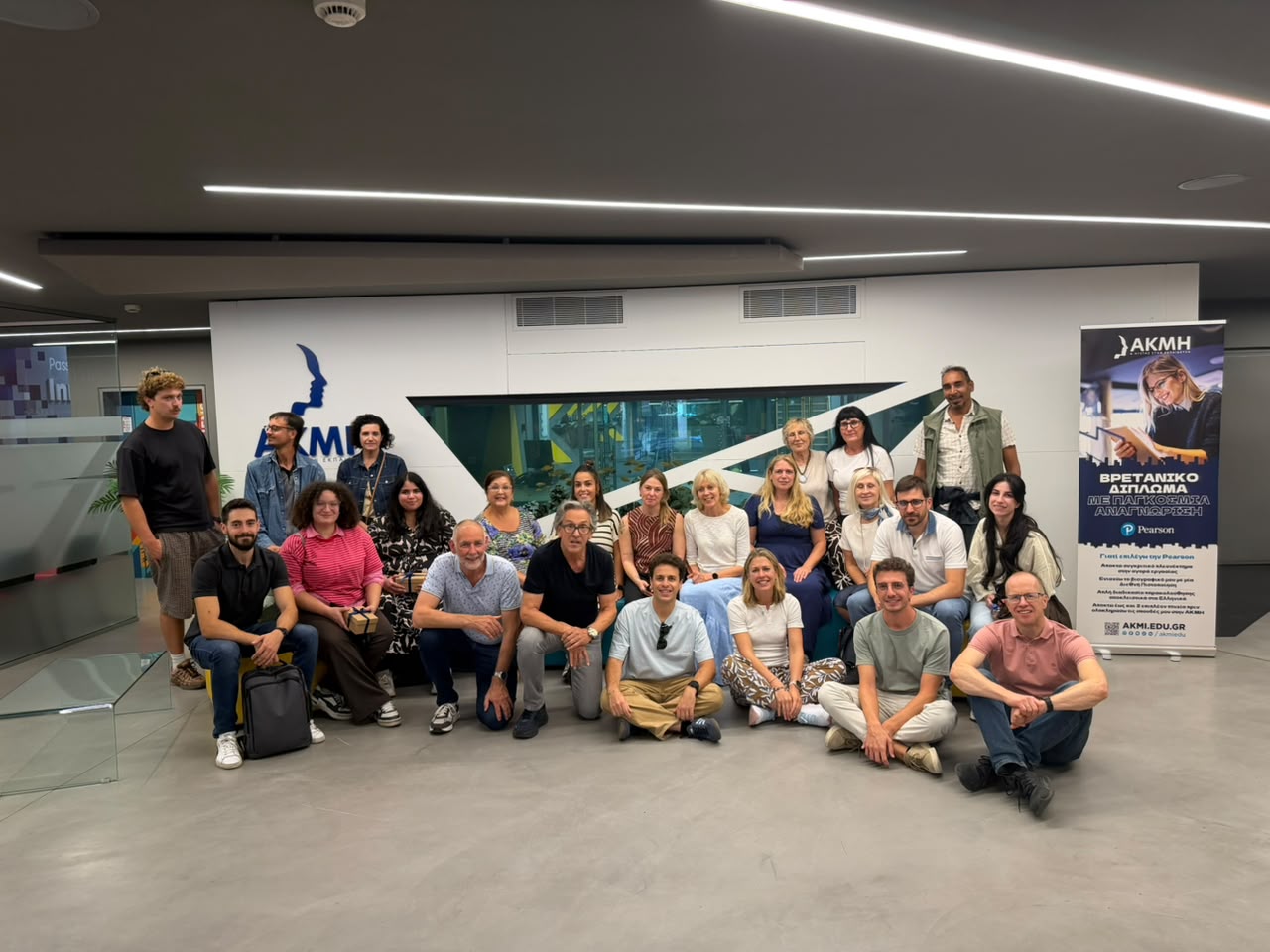
From 5 to 9 October 2026, 24 teachers and project coordinators from six European countries gathered at AKMI in Athens, Greece, for the second EUCLASS Alliance Summer/Autumn School.
Unlike the first Summer School, which focused on introducing teachers to European citizenship education and innovative teaching methodologies, this second edition built on a full year of practical experimentation in partner schools. Following the initial training, teachers had implemented pilot activities with their students, testing different approaches to integrating EU-related topics into VET.
The Athens School therefore provided an opportunity to reconnect, exchange experiences and reflect on the lessons learned during the piloting phase, while identifying ways to further develop European citizenship education across the partner institutions in Estonia, Finland, Greece, Italy, the Netherlands and Spain.
From Classroom Pilots to New European Collaborations
The programme was designed to build on the experiences gained during the first year of EUCLASS implementation, combining reflection on classroom practices with the development of new opportunities for cooperation between partner schools.
The activities began with an EUCLASS Reunion, giving participants the opportunity to reconnect one year after their first Summer School and share meaningful experiences from implementing EUCLASS in their schools. An opening plenary then provided an overview of the project's progress, highlighting the achievements of the first implementation phase and setting the scene for the work ahead.
Sharing Classroom Experiences Across Europe
A central part of the programme was the “EUCLASS Classroom Stories” Practice Marketplace, during which national teams from Finland, the Netherlands, Italy, Spain and Estonia presented selected activities implemented with their students.
Rather than simply reporting what had been delivered, teachers were encouraged to share the stories behind their practices: what they had tried, how students had responded, which approaches had worked well, what challenges they had encountered and what lessons they had learned. Each presentation was followed by a Critical Friends feedback session, allowing colleagues from other countries to ask questions, exchange perspectives and suggest improvements. This collaborative approach encouraged participants to look beyond their own national contexts, identify transferable practices and consider new ideas to introduce into their teaching.
Making the Most of EUCLASS Educational Resources
The programme also introduced the EUCLASS Activity Repository, bringing together educational resources developed during the first piloting phase.
Teachers had the opportunity to explore the available materials, identify activities relevant to their students and consider how these could be adapted to different vocational sectors and learning environments.The repository represents an important step towards making the experience gained during the first project year accessible and reusable across the partnership.
Designing the Next Transnational Activities
Another key component was the School Design Lab, dedicated to planning the next phase of cooperation between EUCLASS partner schools.
Working in three twin-school partnerships, participants focused on two forthcoming project activities: Teacher Assignments Abroad and Online Collaborative Activities involving students from different countries.The objective was to develop connected educational experiences, ensuring that teacher exchanges and online student collaboration would reinforce each other rather than operate as separate initiatives.
Through two design sprints, each partnership worked on a shared EU-related theme, considered its relevance to vocational education and developed initial plans for both activities. A peer-consultancy exercise then allowed teachers to exchange feedback and strengthen the feasibility and educational value of their proposals.The session was intended to conclude with concrete partnership plans, agreed responsibilities and next steps for implementation.
By connecting reflection on the first year of piloting with the collaborative design of future activities, the Summer School helped transform individual classroom experiences into shared opportunities for European cooperation
The European Skills & VET Week is here to put skills and vocational education and training at the centre of the conversation about Europe’s future.
This initiative on skills and VET, organised by Cedefop and led by the European Commission, connects social partners, VET providers and public authorities to share insights, showcase best practices and drive strategies for upskilling and reskilling across Europe.
See how to get involved: ec.europa.eu/skills-week