Designing the New €3 Coin: Exploring European Identity Through Creativity
What if you could design a new €3 coin for your country? Which symbol would you choose, and what story would it tell about your national identity?
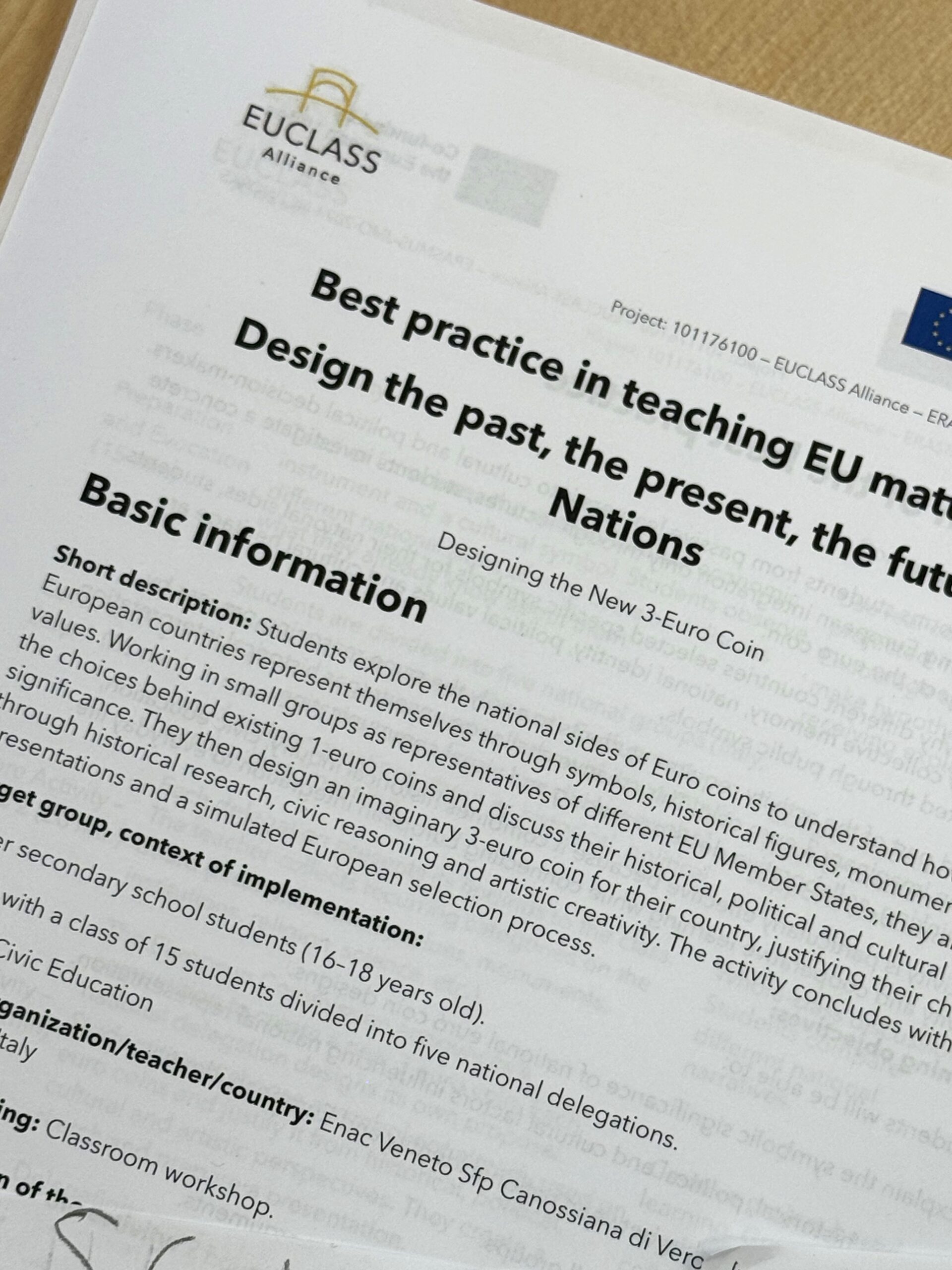
This was the challenge presented to 15 VET graphic students at ENAC Veneto – SFP Canossiana di Verona, Italy, as part of the EUCLASS Alliance project.
On 4 June 2026, students aged 16–18 took part in a workshop led by teacher Matteo Mirandola, combining history, civic education and creativity to explore how European countries represent their identity through everyday objects.
The activity, Designing the New €3 Coin, is a practical example of how European citizenship education can become more accessible and engaging through active learning.
Discovering Europe Through Everyday Objects
We use euro coins every day, but how often do we stop to look at the images they carry?
While euro coins share a common European side, their national sides tell different stories. Historical figures, monuments, cultural references and national symbols reflect how countries choose to represent themselves.
The workshop began with students becoming "symbol detectives". Divided into five national delegations representing Italy, France, Germany, Spain and Greece, they examined existing €1 coins and investigated the meaning behind their designs.
Why was a particular figure or monument chosen? What values does it communicate? Who feels represented by that symbol, and who might not?
Through research and group discussions, students discovered that the images on a coin are not simply decorative. They reflect historical choices, cultural heritage and collective memory.
Each delegation then presented its findings, comparing the different ways European countries express their national identities.
The Challenge: Creating a New €3 Coin
After exploring existing coins, students were invited to imagine a new scenario: the European Commission had launched a fictional competition to design a €3 coin.
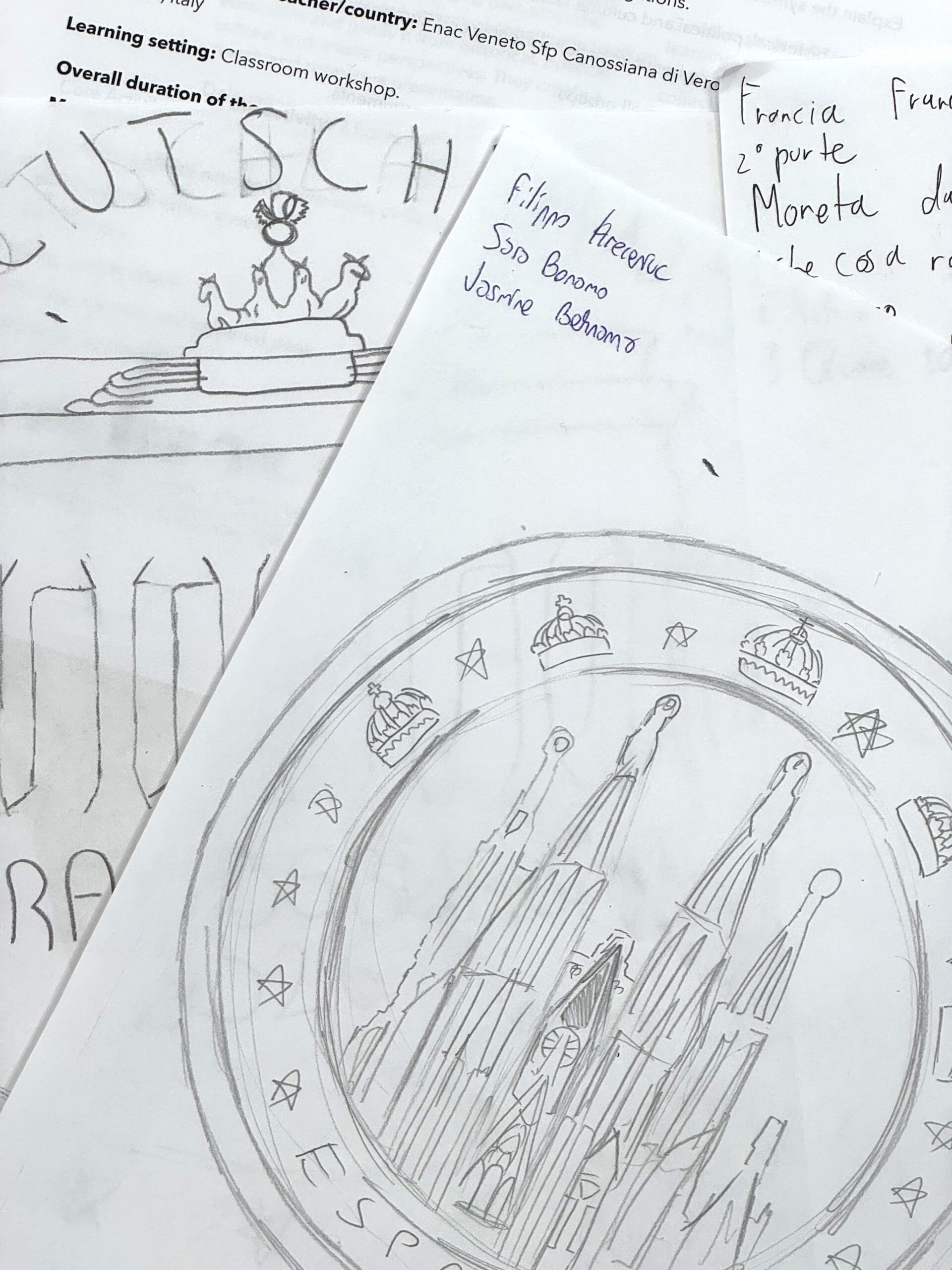
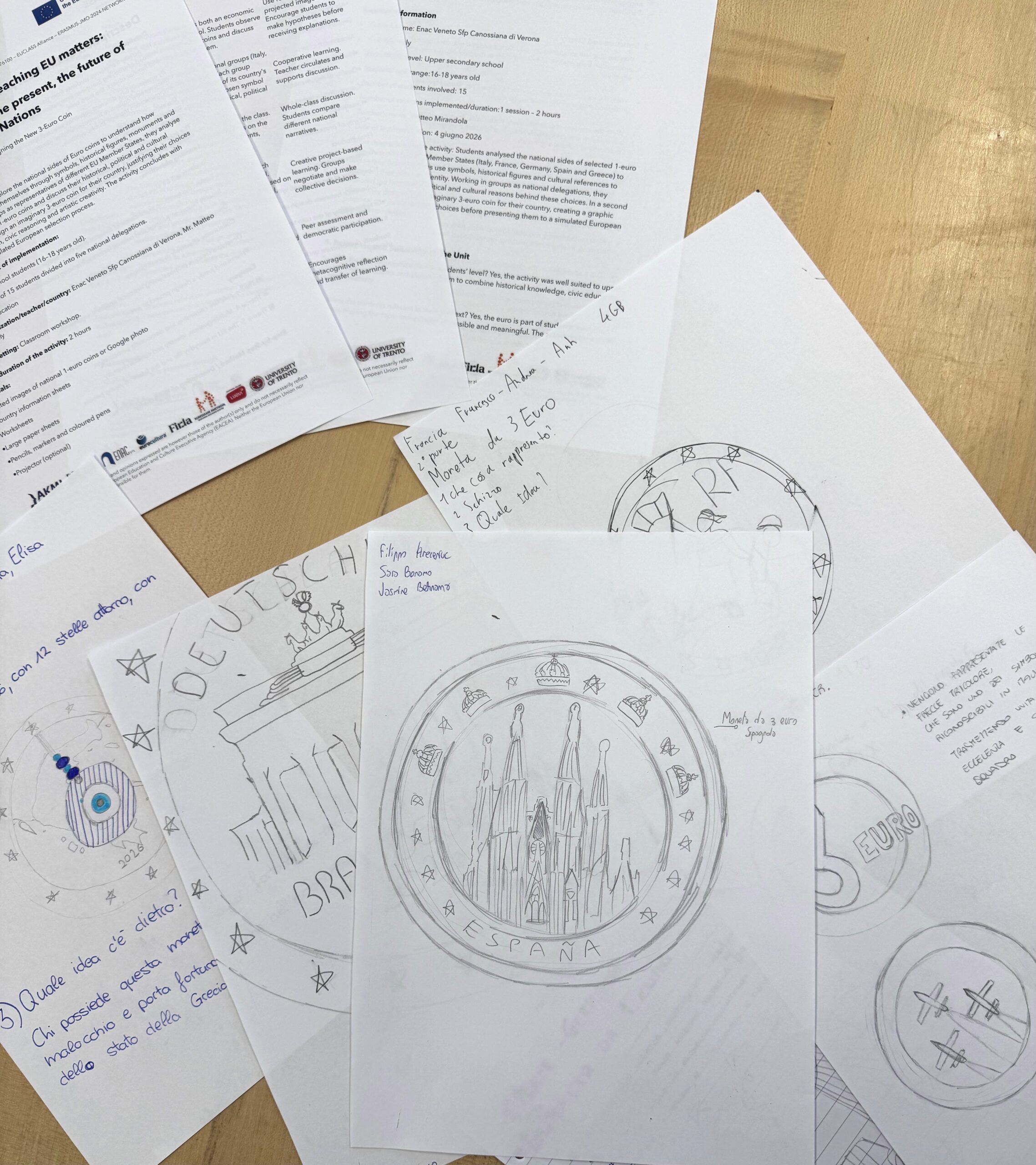
Each national delegation had to create a proposal for its country, choosing a symbol and explaining the reasons behind it. There was one important rule: the design should go beyond symbols already featured on existing euro coins.
Students had to think creatively while considering the historical, cultural and civic significance of their choices.
Working in teams, they discussed different possibilities, negotiated ideas and produced hand-drawn sketches. Their proposals explored different ways of representing national identity, from historical events and artistic heritage to cultural traditions and shared values.
But the task was not simply to produce an attractive design. Each group had to explain what its symbol represented, why it deserved to appear on a national coin and what message it would communicate to other European citizens.
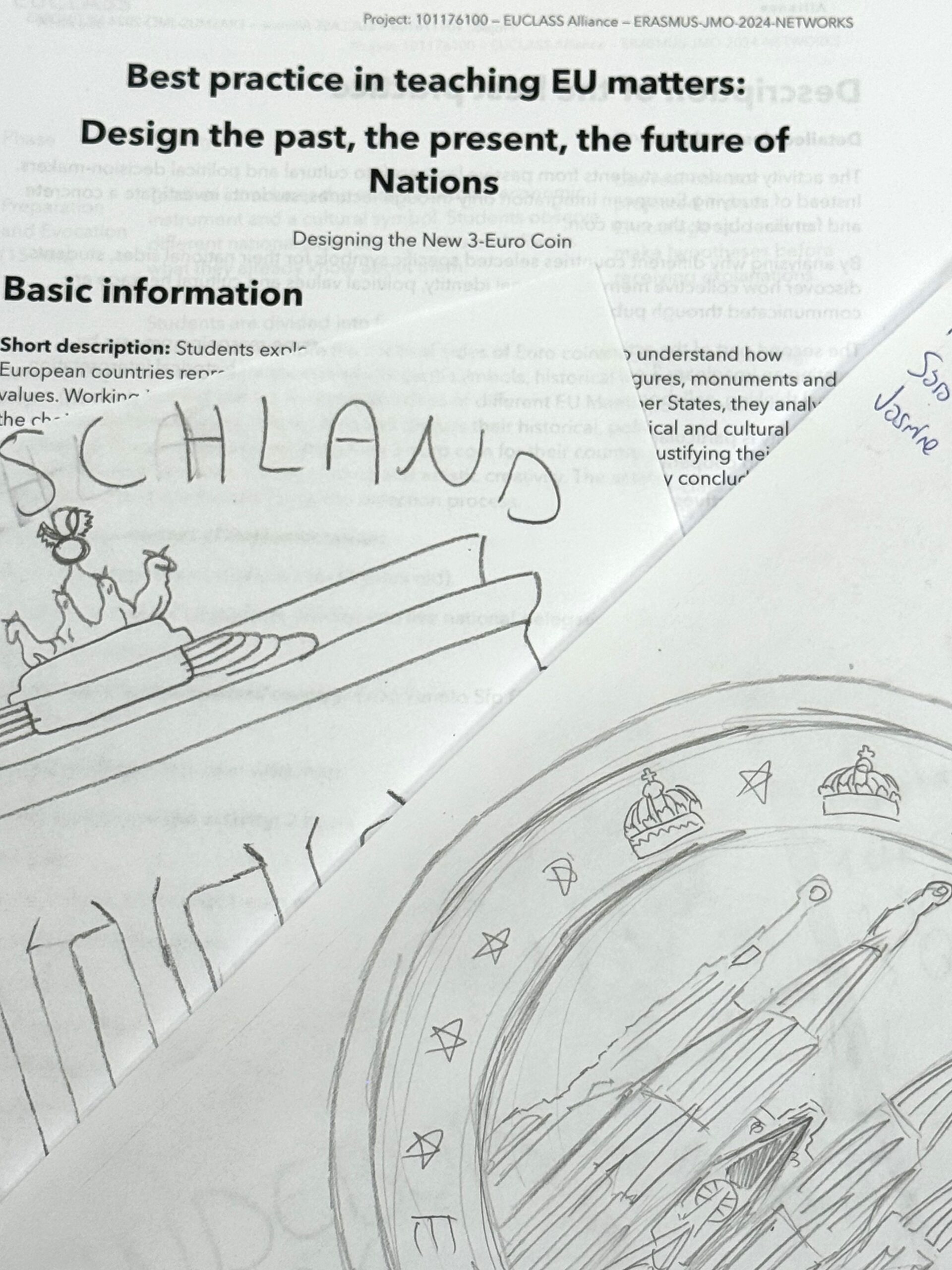

From Creativity to Democratic Decision-Making
The final stage transformed the classroom into a simulated European selection committee.
Each delegation presented its proposed €3 coin, defended its choices and evaluated the other groups' designs according to criteria such as representativeness, originality and graphic quality.This process encouraged students to listen to different perspectives, justify their opinions and make collective decisions.
The workshop concluded with a broader question: If you had to design a €3 coin representing Europe as a whole, rather than a single country, which symbol would you choose?
The question opened the way to reflection on what Europeans share, how national identities coexist and which values could represent a common European identity.
What Did Students Learn?
According to the teacher's evaluation, the activity generated strong engagement and active participation throughout the session. Students demonstrated curiosity, collaborated effectively and developed thoughtful proposals. The workshop helped them connect historical and cultural knowledge with critical thinking, communication and creativity.
The experience showed that meaningful European citizenship education does not necessarily require complex resources. With images of euro coins, worksheets, paper and drawing materials, a familiar everyday object became the starting point for exploring identity, culture and democratic participation.
The main lesson is simple: European citizenship does not have to be taught only through textbooks or explanations of institutions. It can begin with something as familiar as a coin, encouraging students to ask questions, exchange perspectives and reflect on what it means to belong to both a nation and Europe.
Sometimes, a small object can open up a much bigger conversation about Europe.