From Global Citizenship to VET Practice: What Teachers and Trainers Can Take Away from EfVET 2026
Making Europe visible through practical activities
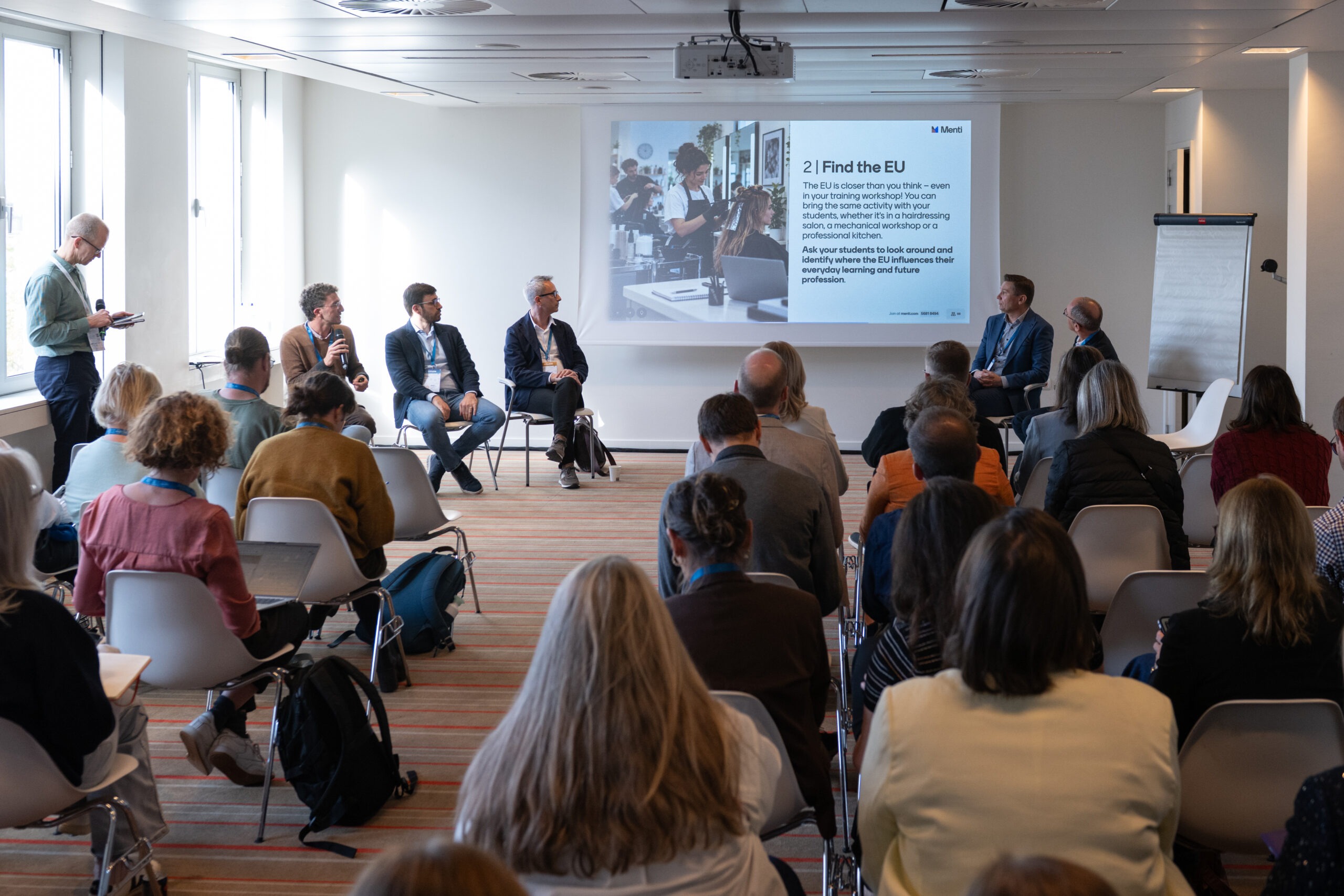
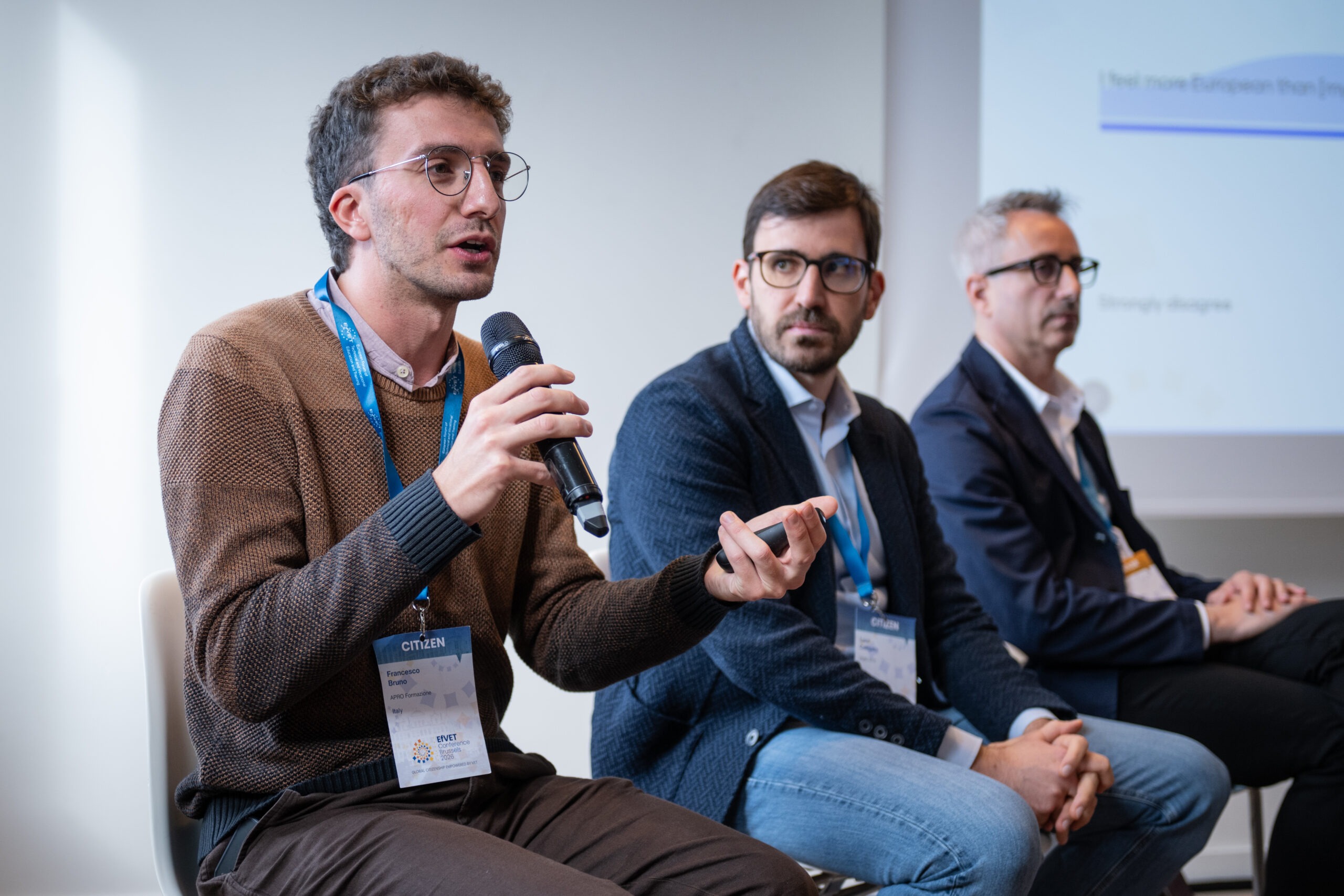
Representing EU CLASS Alliance, Luca Calligaro (ENAC ETS), together with Francesco Bruno (Apro Formazione), introduced participatory approaches drawn from the experience of Jean Monnet projects.
Three examples illustrated how citizenship education can become more accessible and relevant to VET learners.
Moving Debate encourages learners to take a position on statements concerning citizenship, European identity or democratic values. Participants explain their reasoning, listen to different perspectives and can reconsider their position. The activity combines critical thinking, communication and respectful disagreement.
Find the EU starts from familiar situations, such as travelling abroad, using a smartphone or staying in a hotel. Learners identify where European rules, rights and opportunities influence their everyday experiences. The same approach can be applied to vocational settings, from consumer protection and product labelling in hairdressing to safety standards in technical workshops.
Work-based learning activities provide another entry point. Culinary students might explore European geographical indications through menu design, while graphic design learners could work with EU visual identity requirements. Such activities help connect European topics with professional tasks and sector-specific knowledge.
These examples show that citizenship education can be introduced through relatively small adjustments to existing learning activities, rather than requiring an entirely separate curriculum.
From shared challenges to possible actions
The following day, the workshop “Ideas in Action! From Global Citizenship to VET Practice” invited participants to move from reflection to collaborative problem-solving.
Facilitated by Luca Calligaro and Federico Tubiello (Apro Formazione), the session encouraged VET professionals to identify challenges and explore what their organisations could contribute, what support they might need and which first steps could be realistic.
The three working groups developed complementary perspectives.
- Integrating global citizenship across vocational subjects
The first group emphasised a transdisciplinary approach. Sustainability and the United Nations Sustainable Development Goals were identified as useful starting points for addressing global issues through sector-specific examples, including supply chains and their wider social and environmental consequences.
The group also highlighted the need for continuing professional development to help teachers integrate these topics into vocational learning.
- Starting international cooperation on a small scale
The second group focused on intercultural understanding through direct interaction between learners.
One proposal was a Virtual Global Coffee Break: an informal online exchange connecting students from different countries to share experiences and perspectives.
The idea illustrates how international learning opportunities could begin with accessible classroom-to-classroom activities, without necessarily requiring physical mobility or large-scale projects.
- Connecting citizenship education with the workplace
The third group identified limited resources as a significant challenge and explored how closer engagement with companies might support citizenship education.
Corporate Social Responsibility emerged as a possible framework for connecting vocational learning with social responsibility in professional environments, alongside further training opportunities for educators.
What can VET practitioners take away?
Although the workshop did not produce ready-made programmes or formal commitments, the discussions highlighted three useful directions for further exploration.
First, start from existing vocational practice. Sustainability, consumer rights, workplace responsibility and intercultural communication can provide meaningful connections between professional skills and citizenship education.
Second, think small and collaboratively. International dialogue does not always require substantial funding. Even modest exchanges between classrooms can offer opportunities to explore different perspectives.
Third, look beyond the classroom. Companies, international partners and other educational organisations can contribute experiences and perspectives that help make citizenship education more relevant.
Turning ideas into everyday practice
The two sessions demonstrated the value of connecting European educational frameworks with the everyday realities of VET providers.
Through its contributions, EU CLASS Alliance supported this exchange by sharing participatory methodologies and helping practitioners explore possible responses to common challenges.
The next opportunity is to build on these discussions: adapting existing practices, experimenting with small-scale activities and strengthening cooperation between teachers and organisations.
Making global citizenship part of VET does not necessarily mean doing more. It can begin by recognising the citizenship dimension of what learners already do — and making it a more intentional part of their education.