
Icebreakers to build international teams
One of the biggest challenges of international mobility is turning a room of strangers who don't share a language into a group that can actually work together. On the opening day of the EUCLASS Alliance study visit in Brussels, the teachers tackled this head-on with an icebreaker activity designed to be fast, playful, and almost entirely non-verbal.
To form working groups without a single word of shared instruction, students were each given a fragment of a photograph of a famous European landmark from one of the six participating countries. Non-verbally, they had to find the person holding the matching piece, then pair up with another duo holding the second landmark from the same country, until six mixed-nationality teams of five or six students had formed. Because the exercise relies on observation rather than language, it puts every student on equal footing from the very first minute — a particularly important design choice for a VET audience with mixed language proficiency.
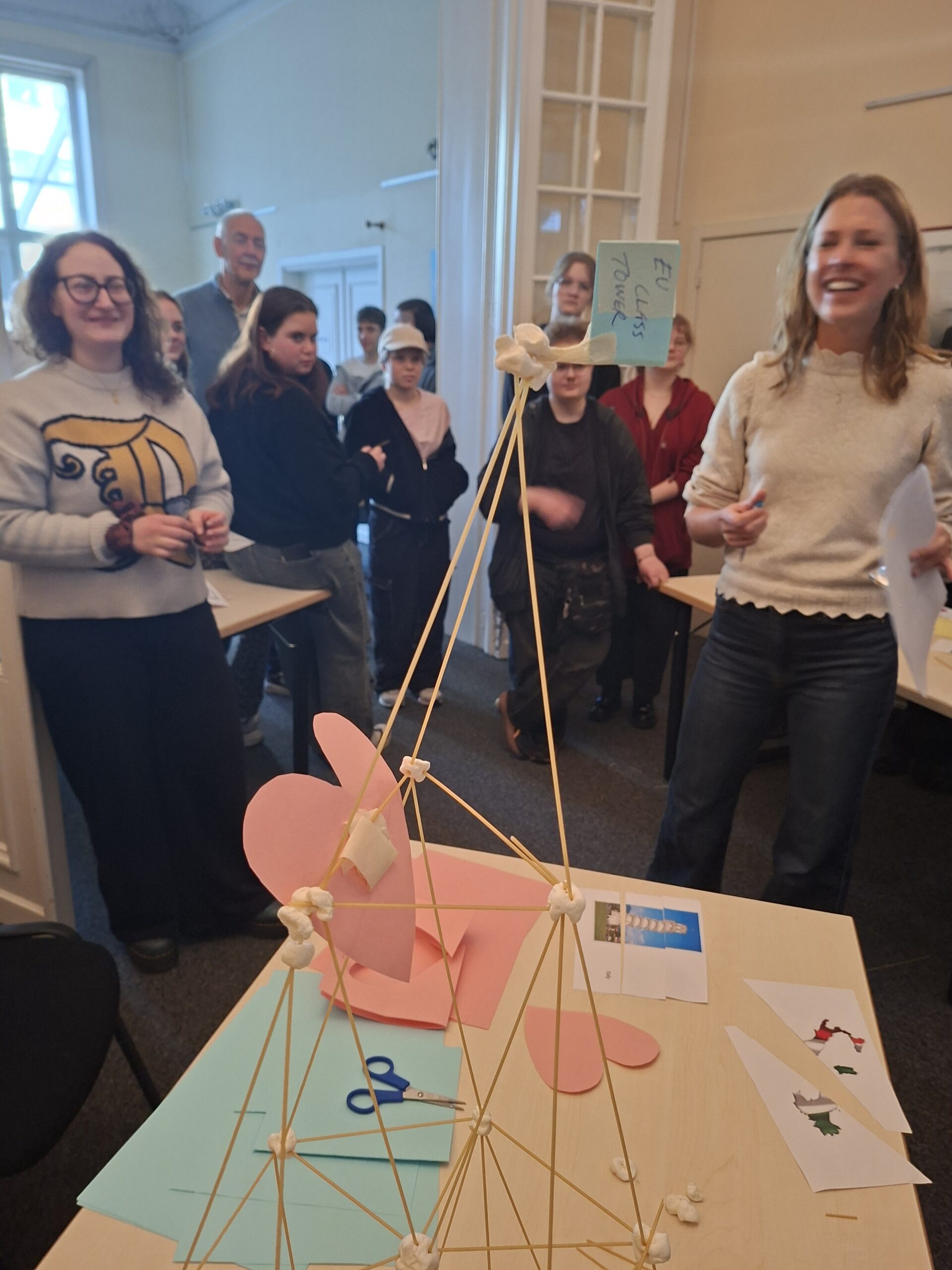
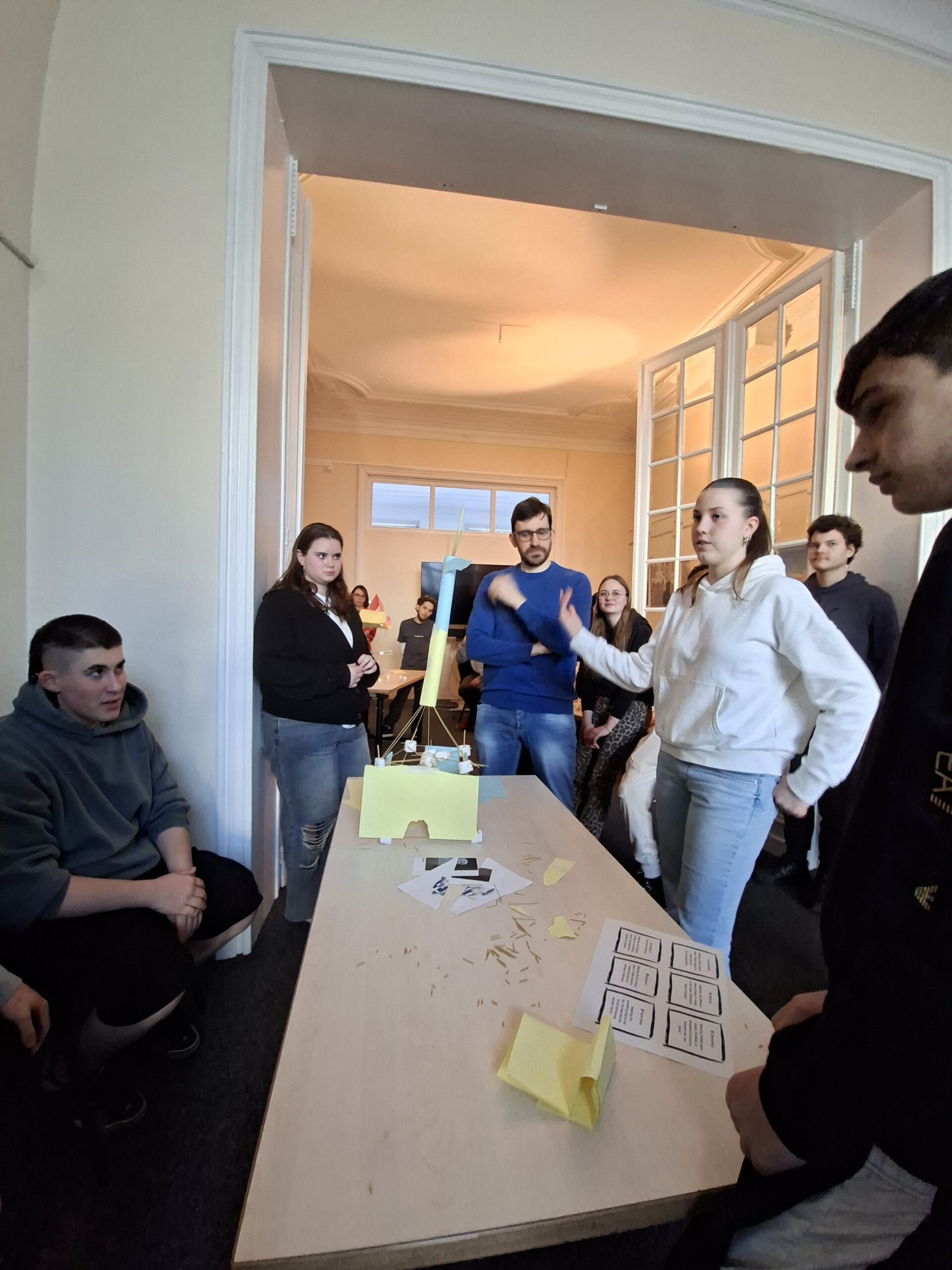
With teams formed, the energy shifted to a hands-on construction challenge. Half the group built a European Bridge using only straws or spaghetti, one sheet of paper and 30 cm of tape. The other half built a European Tower 2050, the tallest free-standing structure they could manage using only paper, no tape or scissors allowed. Both builds ran on a tight six-minute clock, followed by a short public test and a ten-to-fifteen-second team pitch explaining what their structure represented for Europe's future.
To form working groups without a single word of shared instruction, students were each given a fragment of a photograph of a famous European landmark from one of the six participating countries. Non-verbally, they had to find the person holding the matching piece, then pair up with another duo holding the second landmark from the same country, until six mixed-nationality teams of five or six students had formed. Because the exercise relies on observation rather than language, it puts every student on equal footing from the very first minute — a particularly important design choice for a VET audience with mixed language proficiency.
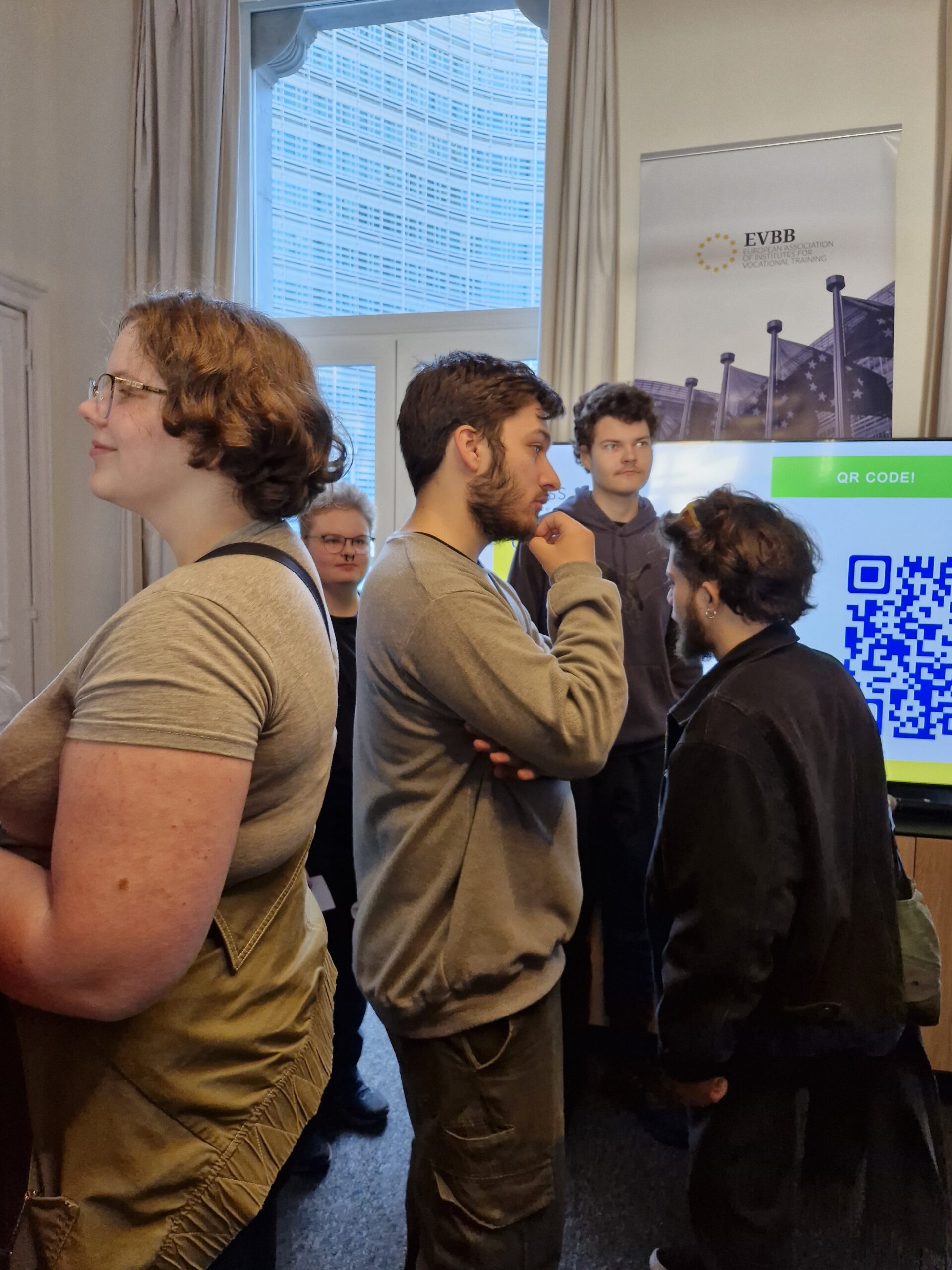
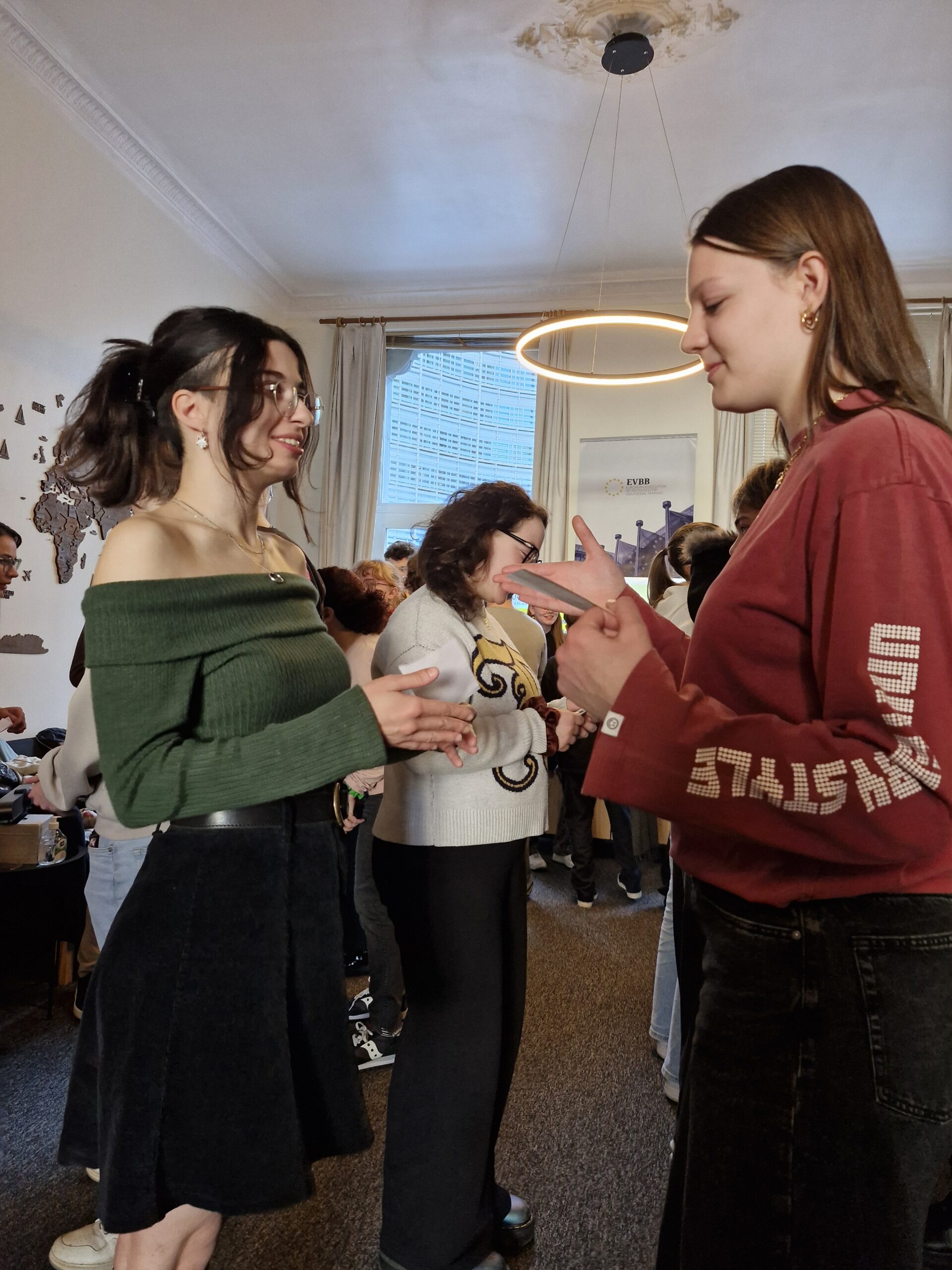
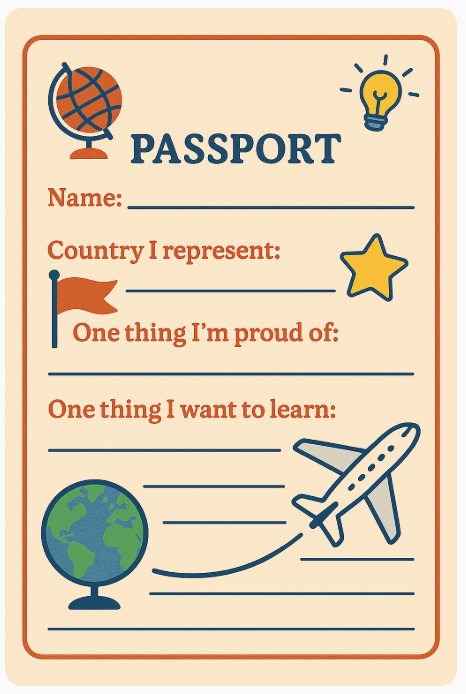
Then there was the “speed dating” format adapted for cross-cultural interaction. Students formed two concentric circles, facing a partner in the opposite circle. Using a personal “passport card” as a conversation prop, each pair had 45 seconds to introduce themselves before the teacher called “Switch!” and the outer circle rotated one step to the right. Over five to seven rounds lasting a total of five to seven minutes, every student met multiple peers from other countries in quick succession. The activity closed with two simple prompts — recalling one thing about a previous partner, and naming one word to describe how it felt to meet so many new people — turning a logistics exercise into a moment of reflection.
Because materials are minimal and instructions are short, the activity is inclusive for students with different language levels and learning styles. The final reflection questions:
“What helped your team succeed?”, “Which EU value does your structure represent?”
bring the exercise back to the study visit's core theme, letting teachers connect an icebreaker directly to a discussion on European values within the very first hour of the mobility. This model can be replicated with any group of 20–30 participants, requires only basic craft materials, and takes roughly 40–50 minutes from start to finish making it an efficient way to convert a diverse group of individuals into functioning international teams before the “real” programme even begins.